

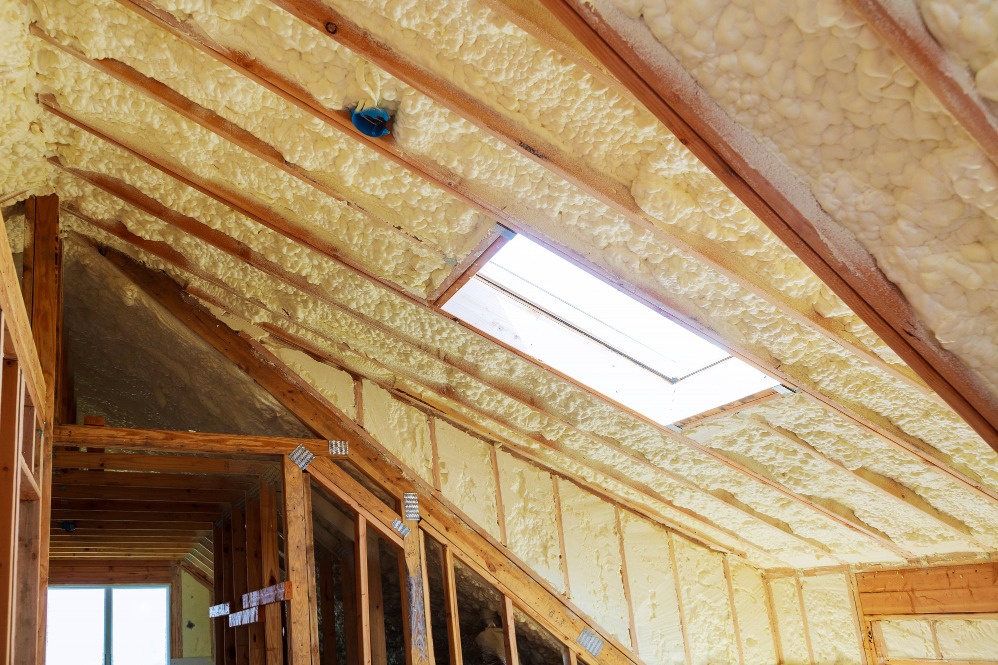
A comfortable building is not created by air conditioning alone. Roofs, walls, ceilings, windows, ventilation, and insulation all influence how quickly heat enters or leaves a property. Building insulation solutions help control this heat movement and can contribute to a more stable indoor environment.
This is especially relevant in Delhi, where buildings experience intense summer heat along with cooler winter conditions. Different properties require different insulation strategies depending on their construction, usage, and operating requirements.
What Does Building Insulation Do?
Insulation reduces the rate at which heat moves through a building component.
During summer, it can slow the movement of outdoor heat into indoor areas. During winter, it can help reduce heat loss from conditioned spaces.
Common applications include:
- Roofs
- External walls
- Internal partitions
- Ceilings
- HVAC systems
- Industrial structures
- Warehouses
- Commercial properties
The selected insulation should match the specific surface and environmental conditions.
Common Insulation Options
Different insulation materials work in different ways.
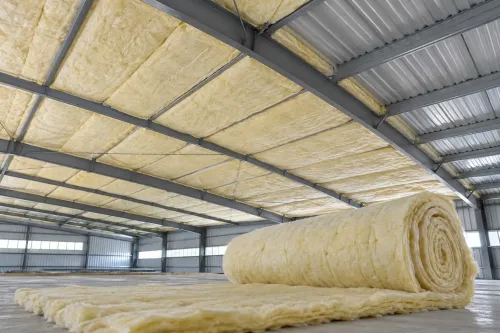
Glasswool provides a fibrous thermal barrier and can be used in roofs, ceilings, partitions, and HVAC applications.
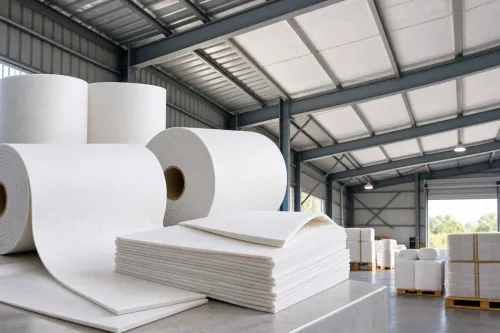
Rockwool is another mineral fibre option and is available in slab formats that can suit certain commercial and industrial assemblies.
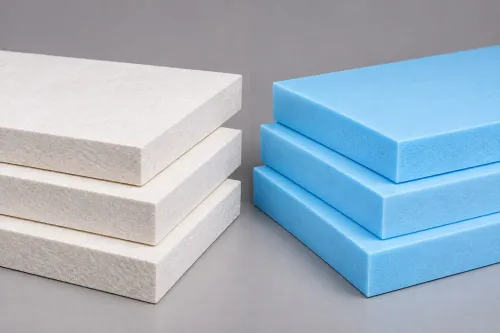
XPS boards provide a rigid insulation format and can be useful where moisture resistance and compressive strength are important.
Reflective bubble insulation works differently by reflecting radiant heat when installed with the required air space.
Ceramic fibre insulation is intended for high-temperature industrial applications rather than ordinary building envelopes.
Why Roof Insulation Is Important
Roof surfaces are directly exposed to sunlight. In Delhi's summer, this can result in significant heat gain, particularly in buildings with metal roofs.
Industrial sheds and warehouses may be especially affected because they often have large roof areas and relatively lightweight construction.
Appropriate roof insulation can help reduce the amount of solar heat entering the occupied area. When combined with effective ventilation and suitable HVAC design, it can contribute to improved thermal conditions.
Insulation and HVAC Performance
Cooling systems must remove heat that enters the building. If the building envelope allows excessive heat gain, the HVAC system may need to operate for longer periods.
Improving insulation can reduce some of this thermal load. However, actual energy savings depend on factors such as building orientation, HVAC efficiency, occupancy, air leakage, operating hours, and indoor temperature settings.
For HVAC consultants, insulation should therefore be considered as part of the broader thermal design.
Choosing the Right Solution
A warehouse does not necessarily require the same insulation system as an office building.
For example:
Offices: Ceiling, wall, and HVAC insulation may support occupant comfort.
Warehouses: Roof insulation can help control solar heat entering large spaces.
Factories: Thermal requirements may involve machinery, process heat, worker comfort, and safety.
Residential buildings: Roof and wall insulation can support more stable indoor conditions.
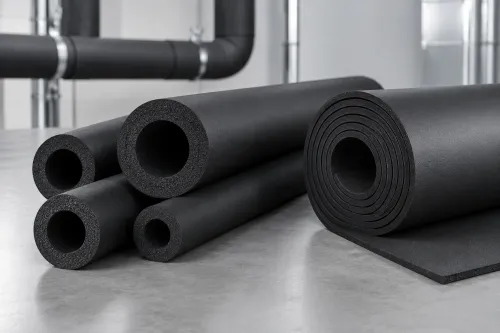
HVAC systems: Duct and pipe insulation can help control unwanted heat gain or loss.
Delhi and NCR Requirements
The construction environment across Delhi and NCR includes offices, factories, warehouses, retail properties, institutional buildings, and residential developments. Their insulation needs can vary considerably.
Local sourcing can simplify procurement, particularly for projects requiring different insulation categories or large quantities.
Shiv Sales Corporation supplies insulation materials for building and industrial requirements, helping project teams evaluate options according to application.
The most effective insulation solution is not necessarily the thickest or most expensive material. It is the one selected according to the building's thermal requirements, construction method, environmental exposure, and installation conditions.