A furnace seal fails when its shape, compression and movement do not match the joint, even if the material carries a high temperature rating. By the end, you will be able to measure the opening, choose between rope, cloth and yarn, specify construction details, and check whether the assembly suits your furnace conditions.
Key takeaways
- Use ceramic rope for defined gaps and perimeters.
- Choose cloth for broad surface coverage, not narrow joints.
- Measure gap width, depth and perimeter before ordering.
- Specify fibre, construction, temperature and installation conditions to suppliers.
Choose the form that matches the furnace joint
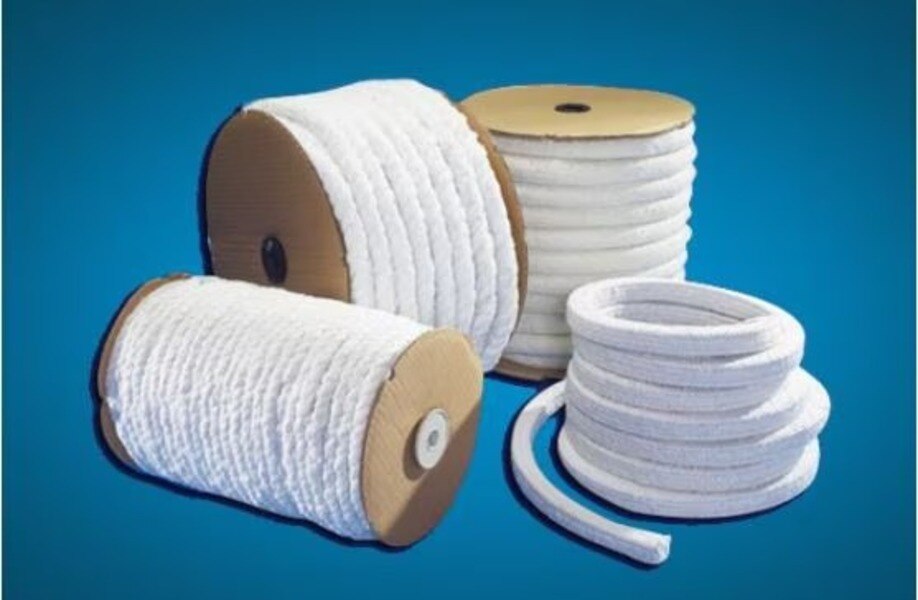
Choose ceramic rope for a defined gap or perimeter, ceramic cloth for broad surface coverage, and ceramic yarn for joining or narrow packing. Geometry determines sealing reliability more than the temperature label alone.
| Option | Sealing geometry | Best furnace locations | Limitation |
|---|---|---|---|
| Ceramic rope | Round or irregular, continuous compressible profile | Door perimeters, removable covers, burner surrounds, narrow expansion gaps and pipe penetrations | An oversized rope can prevent the door from seating |
| Ceramic cloth | Flat, flexible coverage requiring overlap, folding, clamping, stitching, backing or separate rope | Flange covers, removable curtains, hot-face shields, irregular wraps and expansion-joint covers | Woven openings do not form a dependable round seal alone |
| Ceramic yarn | Fine component for tying, stitching, lacing, braiding or narrow packing | Cloth and blanket seams, sleeves, textile repairs and small packing spaces | Loose yarn lacks the bulk and dimensional stability of a finished gasket |
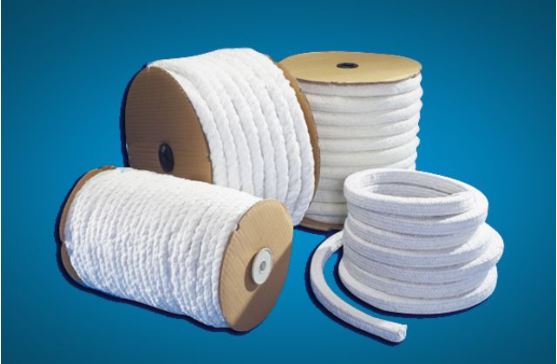
A braided rope sits in a groove or against a flange and maintains contact along the joint. For a furnace door with a repeatable narrow gap, it is easier to inspect and replace than folded cloth.
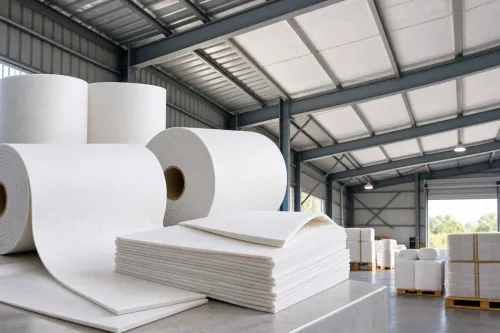
Cloth becomes stronger as a sealing assembly when you add an overlap, compressed backing or rope edge; otherwise bypass paths can remain through the weave. Treat yarn as a construction material, not a door seal.
This ceramic cloth rope yarn comparison in delhi also clarifies ceramic rope yarn applications: rope seals the defined opening, cloth covers the broad surface, and yarn joins or packs where its small form fits.
Measure the gap before ordering or cutting
A seal closes reliably only when its installed size matches the worst gap, available compression and closing force. Measure the furnace cold, with the door fully closed and fully open.
1. Record the gap width at several points, then use the widest or most difficult location rather than the average. Measure groove depth and width, joint length, flange flatness, door movement and available closing force.
2. For rope, specify the installed diameter and target compression, not only the nominal diameter. An open-braided or hollow rope compresses readily; a dense rope resists collapse and needs greater closing force.
3. Allow enough material to maintain contact after expected shrinkage. Do not overfill the groove: an oversized rope can stop the door seating, overload latches and create a leakage path.
4. For cloth, record the required width, overlap, number of plies, fold depth and clamp locations. Cloth suits a broad flange or shield, while rope suits a defined perimeter gap; this is the practical ceramic cloth versus ceramic rope in Delhi comparison.
5. For yarn, record stitch spacing, lacing path and narrow packing depth. Do not use sewing yarn as a load-bearing seal because its temperature rating does not give it rope-like bulk or stability.
6. Check whether the joint slides, opens repeatedly, vibrates or expands. A fixed flange can accept clamped cloth; a moving joint needs clearance and restraint that will not pull the textile apart.
7. Photograph the flange, groove and worn seal before requesting a quotation. Include the worst gap and any abrasion, distortion or missing contact area.
Install rope, cloth and yarn without creating bypass paths
A continuous rope seal belongs around a furnace door or inspection cover. Join the ends with a tight butt joint or manufacturer-approved overlap, and place that joint away from the corner most exposed to leakage. Do not stretch the rope around the perimeter; stretching reduces its installed diameter.
Use these checks for each opening:
- Seat rope evenly in the groove, then confirm that latches apply contact pressure along the entire length. For a burner opening or pipe penetration, select rope for the annular gap and shield it from direct flame impingement.
- Wrap cloth around a flange or irregular penetration with a controlled overlap. Secure it with clips, retainers or stitching outside the hottest contact line.
- Use a cloth-plus-rope arrangement when cloth covers the flange but rope provides the compressible edge seal.
- At an expansion joint, preserve the designed movement. Do not stitch across the active opening unless the assembly is designed to flex there.
- Use ceramic yarn for furnace sealing to stitch plies, lace blanket around a frame, tie a sleeve or reinforce a repair. These are common ceramic rope yarn applications, but keep every seam offset so it cannot form a straight leakage channel.
Close the door cold after installation and inspect for pinching, uneven contact and visible gaps. Check leakage and seal thickness after a heat cycle. Replace any section that has pulled loose, powdered at an abrasion point or lost contact pressure.
Compare construction, fibre and service conditions—not just the label
Construction and fibre reveal more than the word “ceramic”: they show whether the seal will survive compression, movement, abrasion and furnace atmosphere.
| Construction | Handling and compression | Main service concern |
|---|---|---|
| Twisted rope | Flexible and easy to form | Can open or separate when cut, pulled or repeatedly cycled |
| Round braided rope | Retains its shape during handling and compression | Needs correct installed diameter and closing force |
| Knitted rope | Follows movement well | Can flatten or need a retainer to stay in position |
| Sleeved rope | Protects the core from rubbing | Sleeve material may impose a lower temperature limit |
Ask whether the rope is hollow, solid, cored or covered by an abrasion-resistant sleeve. Confirm fibre type, reinforcement, density, tensile strength, nominal dimensions, continuous and intermittent temperature ratings, binder or sizing, loss on ignition and the test method.
A dense rope resists collapse but needs greater closing force; a hollow or open braid compresses more readily.
Stainless-steel wire improves handling strength but brings corrosion, electrical-conduction and metal-temperature limits. Glass filament improves handling without matching ceramic fibre’s high-temperature capability. A peak-temperature figure does not prove resistance to flame impingement, molten-metal splash, chemicals, vibration or repeated door opening.
For ceramic cloth versus ceramic rope in Delhi, specify a protective facing, shield, dense gasket or different refractory design where abrasion or splash is severe. A moving expansion joint needs movement tolerance, not a textile dragged across a flange.
Treat ceramic yarn for furnace sealing as a component for stitching or lacing, and confirm fibre classification and safety data before comparing refractory ceramic fibre with low-biopersistence fibre.
Turn the specification into a supplier-ready purchase check
Before approving an order, give the ceramic textile insulation supplier in Delhi the information that controls fit: joint measurements, furnace temperature profile, atmosphere, movement, contact pressure, closing method and photographs.
| Form | Request from supplier | Cold-fit concern |
|---|---|---|
| Ceramic rope | Braid, core, ply, installed diameter and target compression | Door force and continuous contact |
| Ceramic cloth | Ply, width, thickness, overlap and reinforcement | Coverage without bypass gaps |
| Ceramic yarn | Count, twist, ply, sizing and reinforcement | Stitching or narrow packing, not a bulk gasket |
Request a technical data sheet naming the fibre type, reinforcement, construction, density, diameter or thickness, tensile strength, temperature rating, shrinkage or dimensional-change data, binder or sizing, loss on ignition and test methods. Do not accept “ceramic rope” or “ceramic yarn” as a complete specification.
Confirm batch identification, packaging condition, storage instructions and the safety data sheet. Reject packs with torn moisture-exposed packaging, missing labels, no batch number, or fibres contaminated with oil and grit.
Ask for samples in the proposed installed diameter or thickness. Run a cold-fit trial, then test door-closing force, contact continuity, leakage, hot compression and post-cycle thickness before ordering the full joint length.
Shiv Sales Corporation is useful at this decision point when its quotation matches the measured groove, construction and service conditions. This ceramic cloth rope yarn comparison in Delhi should compare usable installed length, replacement effort and cycle life, not kilogram price alone.
Cut and handle the textile under the safety data sheet with respiratory, skin and eye controls.
Related products
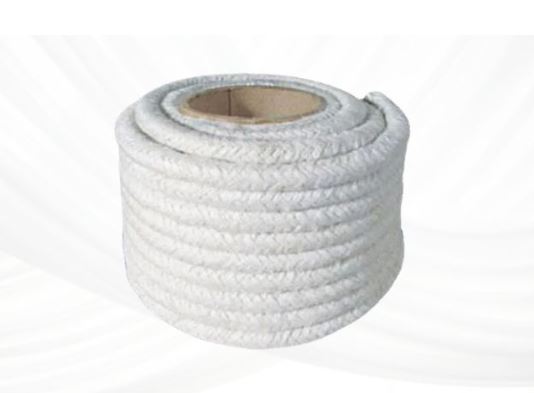 | Ceramic Product In the field of insulation materials, ceramic products play an important role in providing high-temperature resistance and efficient thermal... View product → |
 | Ceramic Product Unveiling the Excellence: Ceramic Products In the field of insulation materials, ceramic products play an important role in providing... View product → |
Frequently asked questions
When should you choose ceramic rope, cloth or yarn for furnace sealing?
Choose rope for a defined gap or perimeter, cloth for broad surface coverage, and yarn for joining or narrow packing.
What should you measure before ordering ceramic furnace sealing material?
Measure the joint gap width, depth, perimeter length and contact surfaces before ordering or cutting material.
How can ceramic textiles create bypass paths during installation?
Gaps at corners, loose overlaps, compressed rope and poorly joined cloth can leave channels for heat or gas to pass through.
What should a supplier-ready ceramic textile specification include?
State the form, dimensions, construction, fibre type, service temperature, atmosphere, movement, compression and required quantity.
Keywords