A 50 mm roll is the practical starting point for most foil-faced insulation joints, but joint width, surface irregularity, and the required bonded margin can change the answer. By the end, you will be able to choose the width, backing, adhesive, and supplier information needed for reliable sealing in Delhi conditions.
Key takeaways
- Use 48–50 mm tape for most foil-faced insulation butt joints.
- Choose wider tape for overlaps, irregular surfaces, or larger joint gaps.
- Check foil thickness, reinforcement, adhesive type, and temperature limits before buying.
- Press tape from the centre outward to prevent wrinkles and open edges.
Why 48–50 mm Is the Default for Most Insulation Joints
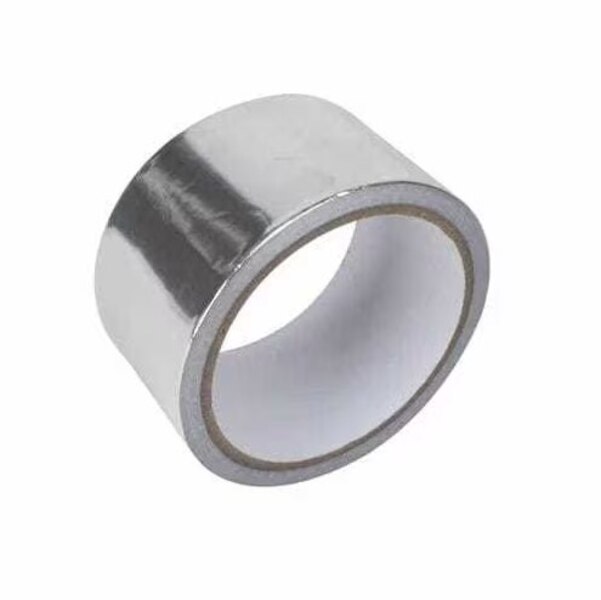
For ordinary foil-faced insulation joints and HVAC sealing, 48–50 mm is the practical default. This aluminium tape size for insulation sealing in delhi bridges a normal butt joint while leaving enough bonding area on both sides. Aluminium foil tape for insulation in this width is also easier to press flat without creating wrinkles.
| Width | Best use | Limitation |
|---|---|---|
| 25 mm | Small punctures, narrow edges, and minor local repairs | Too narrow for many butt joints; exposed edges can create leakage paths |
| 48 mm | Standard foil-faced insulation seams and HVAC joints | Needs accurate placement on wide or uneven joints |
| 50 mm | General-purpose duct and insulation sealing | Not enough margin for badly misaligned facings |
| 75 mm | Uneven facings, wider joints, and extra bonding margin | More difficult to apply smoothly on tight curves |
| 100 mm | Large repairs or unusually wide joints | Excess material and higher wrinkle risk on ordinary seams |
Choose 48 or 50 mm when both facing edges meet cleanly and the tape will sit substantially on each side. The insulation thickness alone does not determine the width; the joint width and required bonded margin do.
Move up to 75 mm when the facing is rough, misaligned, or difficult to centre. Reserve 100 mm for repairs and broad gaps, while 25 mm belongs to controlled spot work rather than general sealing. Clean and dry the facing, then use firm roller pressure to close hidden channels.
Choose Width from the Joint, Overlap, and Surface Shape
Calculate tape width as:
joint width + bonded margin on one side + bonded margin on the other.
Use 20–25 mm of clean, sound contact on each side as a practical starting point. A 10 mm seam therefore needs about 50–60 mm tape; choose 75 mm if the facing is rough, misaligned, or difficult to press flat.
| Width | Best application | Selection check |
|---|---|---|
| 25 mm | Narrow pipe longitudinal seams and small puncture repairs | Use only when the tape can sit flat with a continuous margin on both sides |
| 48–50 mm | Foil-faced insulation joints, ordinary duct seams, and narrow vapour-barrier laps | Confirm the joint is centred and neither edge lands on a fold |
| 75 mm | Wide seams, uneven duct facing, and pipe joints needing a larger overlap | Choose it when 50 mm leaves exposed edges or weak bonded margins |
| 100 mm | Large repairs and unusually wide or damaged joints | Avoid as a default; broad tape wrinkles more easily on curved surfaces |
For pipes, size the tape across the longitudinal split, then check that its edges follow the curve without lifting. Use narrower tape on tight diameters when a wide strip forms wrinkles; overlap adjoining bands by at least 25 mm.
For vapour barriers and duct seams, include the lap itself in your calculation. Seal penetrations, end laps, and support gaps separately; tape width cannot compensate for an open channel elsewhere. This is the practical aluminium tape size for insulation sealing in Delhi when joint geometry, not insulation thickness, controls the choice.
Compare Foil Thickness, Reinforcement, Adhesive, and Temperature Limits
A thin foil suits clean, flat insulation joints, but it tears at corners and loses continuity under movement. For monsoon humidity and Delhi summer cycling, choose construction from the failure risk, not the word high performance.
| Foil or reinforcement | Adhesive | Temperature and service choice |
|---|---|---|
| Plain thin foil | Acrylic pressure-sensitive adhesive | Clean, sheltered joints with little movement; confirm the datasheet’s service range and minimum application temperature |
| Thicker foil | Acrylic pressure-sensitive adhesive | HVAC seams, vapour-barrier joints, and surfaces needing better tear resistance; useful for long-term ageing and ultraviolet exposure |
| Foil with scrim or mesh reinforcement | Acrylic adhesive | Duct edges, irregular insulation, movement, and abrasion; reinforcement limits tearing but does not compensate for poor surface preparation |
| Foil with rubber or hot-melt adhesive | Fast initial tack | Shorter-term or controlled applications; verify heat ageing, summer service temperature, and humidity performance before specifying it |
Choose aluminium foil tape for insulation with acrylic adhesive when the seal must survive temperature cycling, sunlight, and ageing. A thicker foil or scrim reinforcement is appropriate where workers will rub the joint, the substrate moves, or the tape crosses an uneven edge.
Ask for foil thickness, total thickness, adhesive type, peel or adhesion data, minimum application temperature, and service-temperature range. Fire-resistant wording proves little without the test method, substrate, assembly, and classification. Dust, oil, chalk, and moisture cause failure faster than an underspecified foil; clean and dry the surface before application.
Rolls also need cool, dry storage away from sunlight and excessive heat.
Apply the Tape Without Wrinkles, Open Channels, or Failed Edges
Make the facing clean, dry, and smooth before you open the roll. Remove dust, oil, loose fibres, and condensation; repair torn foil and close penetrations around supports before taping. Damp or contaminated surfaces leave channels beneath the adhesive.
Use aluminium foil tape for insulation wide enough to cover the joint continuously and leave a substantial bonded margin on both sides. A narrow strip that barely spans the seam can expose an edge when the facing shifts, while a wider tape cannot rescue a dirty or damaged substrate.
1. Align the insulation edges and press down loose foil. At end laps, corners, and repairs, overlap the facing fully rather than stopping at the edge of the visible joint.
2. Centre the tape over the seam, unroll it gradually, and avoid stretching it. Lay it from one end to the other; stretching creates recoil, wrinkles, and lifted edges.
3. Press the tape with a hand roller or squeegee, working from the centre towards both edges. Firm, even pressure removes unbonded channels that finger pressure can leave hidden.
4. Seal around penetrations, supports, and duct fittings with shaped pieces, then press every perimeter edge. Do not bridge a hole with a single loose strip.
Inspect the finished seal under angled light. Lift and replace any tape with wrinkles, bubbles, open edges, pinholes, or visible gaps; a later strip over a failed edge does not reliably restore vapour continuity. For duct closures, use tape approved for the specific system, such as UL 181A-P or UL 181B-FX where applicable.
What to Check Before Buying Aluminium Sealing Tape in Delhi
Price per roll hides the real cost. Compare sealed metres after checking width, foil thickness, total thickness, core size, carton quantity, batch number, and shelf life.
| Roll offer | What to compare | Why it matters |
|---|---|---|
| 50 mm × 45 m versus 50 mm × 50 m | Delivered length and price per metre | The shorter roll costs more for the same joint coverage |
| 25, 48, 50, 75, or 100 mm width | Width against overlap and surface shape | A narrow roll can create extra joins; a wide roll can waste material on small repairs |
| Foil and adhesive construction | Foil thickness, adhesive type, total thickness | Thin foil can tear during handling, while adhesive ageing controls long-term sealing |
| Temperature performance | Service range and minimum application temperature | A bond applied to a hot duct or cold surface can fail before the insulation is commissioned |
An aluminium insulation tape supplier in Delhi should provide a current technical datasheet, safety data sheet where applicable, test reports, storage limits, and traceable batch information. Treat “fireproof” or “fire resistant” as incomplete until the supplier names the test method, substrate, assembly, and classification.
For outdoor or plant-room work, ask for evidence covering UV, condensation, monsoon moisture, and temperature cycling. Check whether duct-closure or fire-test approval actually covers your insulation facing and joint detail; foil alone does not prove the assembly’s fire performance.
Before you buy aluminium sealing tape in Delhi, confirm sealed-pack storage conditions, expiry or shelf-life marking, and replacement terms for damaged cartons. Ask Shiv Sales Corporation for these records in writing, as you should from any supplier.
Treat “high performance aluminium tape in Delhi” as a specification request, not a grade: demand peel or adhesion data and the adhesive’s temperature limits.
Related product
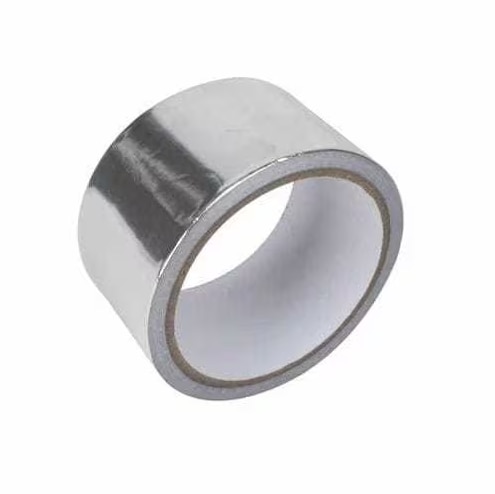 | Aluminium Tape – High-Performance Insulation Seal Aluminium Tape – High-Performance Insulation Seal Aluminium Tape from Shiv Sales Corporation is designed for strong sealing, insulation, and protection across HVAC ducts, pipes, joints, and... View product → |
Frequently asked questions
What aluminium tape size works best for most insulation joints?
A 48–50 mm width suits ordinary foil-faced insulation joints and HVAC sealing because it bridges the joint while leaving bonding area on both sides.
When should you choose a wider aluminium insulation tape?
Choose a wider tape when the joint has a large overlap, a gap, an irregular surface, or needs more edge coverage.
What should you compare besides tape width?
Compare foil thickness, reinforcement, adhesive type, and the tape’s temperature limits for the insulation and application.
How do you apply aluminium foil tape without failed edges?
Clean and dry the surface, centre the tape over the joint, press from the centre outward, and smooth the edges firmly without stretching the tape.
Keywords