

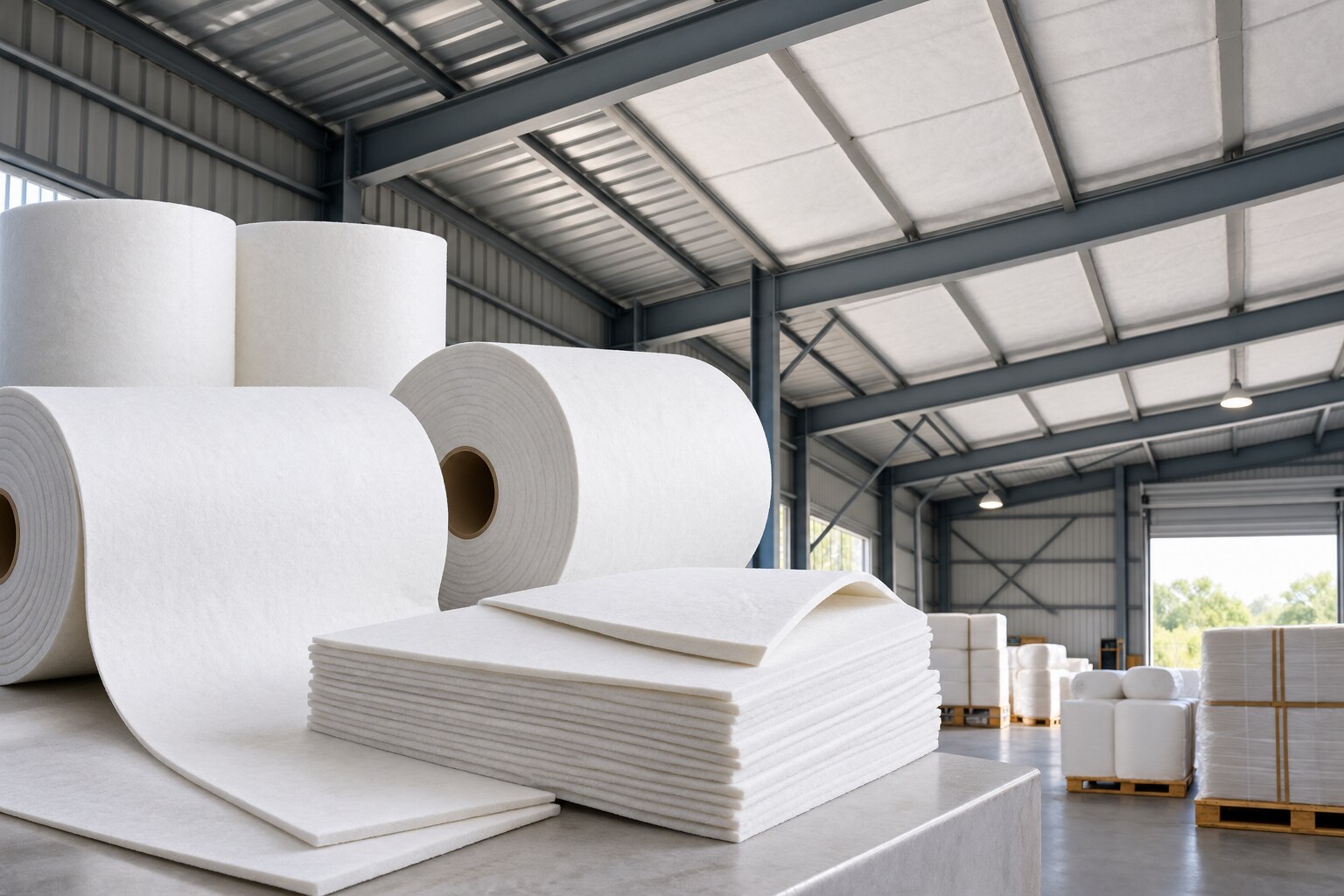
Ceramic fiber paper is often specified for furnaces, gaskets, and hot equipment, but a shed roof faces rain, condensation, wind, fastener movement, and abrasion. You will be able to decide whether it belongs in your roof or wall assembly, define the grade and quantity required, and compare Delhi suppliers using documents rather than marketing claims.
Key takeaways
- Use ceramic paper as a supported liner, gasket, or local thermal break.
- Request temperature rating, density, thickness, fiber type, and batch details.
- Install it beneath metal roofing with continuous support and mechanical retention.
- Calculate coverage from roll width, length, laps, cuts, and waste.
Is ceramic fiber paper suitable for a shed roof or wall?
Ceramic paper for shed insulation is suitable only as a thin hot-face liner, gasket, or local thermal break—not as a complete roof or wall system. It is a compressed refractory-fiber sheet, not a structural board, so it needs continuous support, mechanical retention, and protective facing or cladding.
Leaving it exposed beneath a metal roof is a poor detail. Monsoon rain, condensation, wind, screws, sharp sheet edges, roof movement, and abrasion can wet, tear, compress, or dislodge the paper. Do not specify it where people walk, vibration is severe, repeated wetting occurs, or the insulation must remain rigid.
Choose a different material when the shed requires building-envelope insulation:
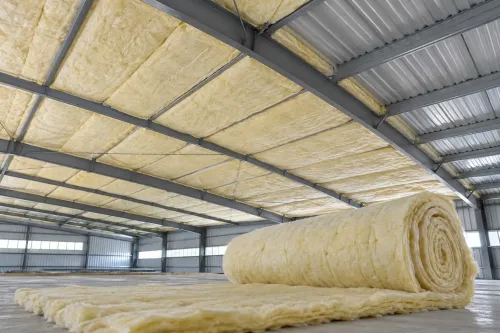
- Mineral wool suits general thermal and fire insulation where a supported, more durable cavity layer is needed.
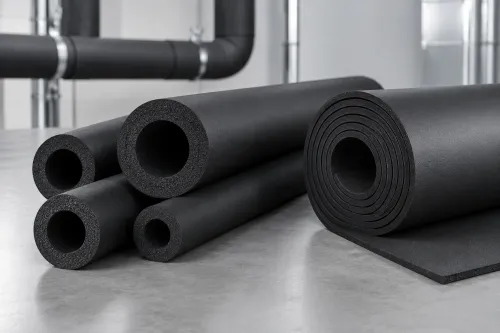
- Ceramic fiber blanket suits high-temperature surfaces that need flexibility and coverage over irregular equipment.
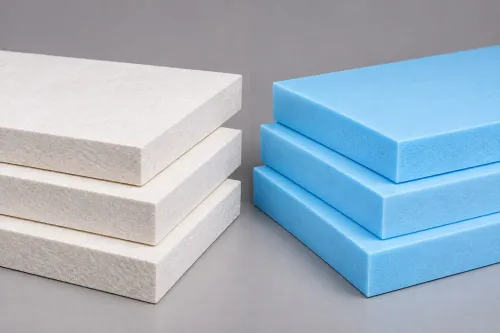
- Ceramic fiber board suits a rigid hot-face lining or panel that requires shape retention.
- Calcium silicate suits rigid, high-temperature equipment insulation where compression resistance matters.
- Rigid roof panels suit a complete roof assembly with structural support, weather protection, and controlled joints.
- Foil-faced building insulation suits a dry, protected roof or wall cavity needing a vapour-control facing.
The search phrase ceramic fiber paper insulation in Delhi does not establish suitability: a furnace grade can be too fragile, thin, or moisture-sensitive for a shed. Ceramic paper alone is not an airborne-sound barrier; acoustic performance depends on the complete assembly’s mass, airtightness, cavity depth, and decoupling.
Which technical specifications must you obtain before ordering?
Compare grades by service data, not the headline maximum temperature. A ceramic fiber paper for shed insulation supplier in Delhi should provide one technical data sheet for the exact batch and grade.
| Grade | Classification temperature | Continuous-use temperature | Conductivity evidence |
|---|---|---|---|
| Aluminosilicate paper | Stated in °C | Stated separately in °C | Values at named mean temperatures and test method |
| Higher-density paper | Stated in °C | Stated separately in °C | Compare at the same temperatures and method |
| Bindered paper | Fiber rating is not service rating | Check binder limit | Room-temperature conductivity does not represent performance beside a hot flue or exhaust duct |
Ask for these details before accepting a quotation:
- Thickness, width, roll or sheet dimensions, nominal density, aluminosilicate or other fiber composition, thickness tolerance, and density tolerance.
- Organic binder type, binder burnout temperature, first-heating smoke or odor, shrinkage after heating, and handling strength after burnout.
- Tensile strength, tear resistance, compressibility, recovery, moisture or water-absorption data, oil resistance, chemical compatibility, and humidity guidance.
- Batch number, certificate of analysis, test dates, and the test method for every reported value.
Treat “non-combustible” as a material claim, not proof of a fire-rated roof or wall. Request evidence for the named fire-test standard and classification; the paper’s rating does not establish the fire performance of the complete assembly.
How should ceramic fiber paper be installed beneath a metal shed roof?
A search for ceramic fiber paper insulation in delhi does not make the material suitable for direct roof exposure. Install it as a thin liner on continuous support, then shield it from rain, condensation, wind, abrasion, and impact.
1. Prepare a clean, dry, continuous substrate. Remove burrs, oil, loose rust, sharp sheet edges, and protruding fasteners; otherwise they can puncture the paper or trap moisture.
2. Keep the paper out of any path where monsoon rain or condensation can soak it. Add a weatherproof outer layer or cladding, a drying path, and a condensation-control detail such as a sealed warm-side vapour-control layer where the roof design requires one.
3. Apply the specified high-temperature adhesive only after checking its documented temperature range and compatibility with both the paper and substrate. Add mechanical retention with clamping strips or wide washers that hold the sheet without tearing it.
4. Close butt joints and overlaps, and detail penetrations, purlins, screws, edges, and thermal bridges with compatible ceramic-fiber rope, foil, cloth, or facing. Confirm each material’s temperature and moisture limits first; untreated gaps become heat-leak and condensation points.
5. Fit protective facing or cladding because wind can lift paper and moving metal can abrade it. Cut with controlled dust, local ventilation, eye protection, protective clothing, and a respirator selected from the safety data sheet. Clean with a HEPA vacuum; never dry sweep or use compressed air.
The final roof assembly, not the paper alone, determines fire and weather performance.
How do you choose thickness and calculate the amount to buy?
Choose thickness from heat flow and installation limits, not from the thinnest sheet or the highest temperature label. Start with the hottest adjacent surface, desired inner-surface temperature, permitted heat loss, available clearance, and the number of layers your fixing system can retain.
For a first estimate, required resistance is temperature difference divided by permitted heat flux; compare thickness divided by conductivity at the same mean temperature.
- Request conductivity at named mean temperatures and the test method. A room-temperature value cannot represent performance beside a hot surface.
- Allow for purlins, screws, brackets, laps, edges, penetrations, and other thermal bridges. Two thin layers need staggered joints and positive retention; nominal thickness is not installed performance.
- Calculate net area as shed length × measured sloping roof width. If the roof has two slopes, add both slope areas; then add side-wall and end-wall areas when insulated.
- Subtract doors and other openings. Add measured overlap or butt-joint requirements, corner and penetration cutting allowance, and offcuts.
- Do not assume coverage per roll. After the supplier confirms width, length, and dimensional tolerance, divide the required area by the usable area and round up to exact roll or sheet quantities.
| Option | Installation effort | Cost comparison |
|---|---|---|
| Ceramic paper | Needs support, facing, careful joints, and dust control | Compare total system cost, not paper price |
| Blanket or mineral wool | Easier coverage; needs moisture and compression control | Often lower labour for broad areas |
| Board or rigid roof panel | Faster continuous coverage; requires accurate cutting and stronger fixing | Higher material cost can reduce installation time |
Buy ceramic fiber paper only when its completed assembly beats these alternatives for the temperature, clearance, and maintenance conditions.
How do you choose and verify a ceramic insulation paper supplier in Delhi?
Choose a ceramic insulation paper supplier by issuing one identical specification to every bidder, not by accepting “fireproof” or “heat resistant.” If you plan to buy ceramic fiber paper for a shed, state:
- Application temperature, substrate, roof or wall dimensions, thickness, layers, indoor or outdoor exposure, joint method, quantity, delivery area, and required documents.
- Technical data sheet, safety data sheet, certificate of analysis or conformity, batch traceability, thermal-conductivity table, shrinkage result, handling-strength data, binder type, and applicable fire-test report.
- Roll and sheet formats, minimum order quantity, lead time, sample policy, shed-layout cutting or packing, and moisture protection during transit.
Compare quotations against the same evidence.
| Supplier response | Acceptable evidence | Reject or clarify |
|---|---|---|
| Temperature | Classification and continuous-use temperatures, with conductivity at named mean temperatures | Maximum temperature only |
| Material control | Batch number, density, thickness and tolerance, fibre composition, binder and burnout data | Undated brochure |
| Supply | Confirmed width, length, roll or sheet count, lead time and packing | Assumed coverage |
Ask Shiv Sales Corporation to quote against this specification so its offer can be compared fairly with other suppliers.
On delivery, inspect the packaging, batch number, seal, moisture exposure, contamination, thickness, damaged edges, width, and roll or sheet count. Quarantine wet packaging or unexplained variation. Record leaks, maintenance access, roof movement, and heating-cooling cycles; these conditions determine repair and replacement frequency.
For searches using ceramic fiber paper for shed insulation supplier in delhi, those records matter more than a marketplace ranking.
Related products
 | Ceramic Product Unveiling the Excellence: Ceramic Products In the field of insulation materials, ceramic products play an important role in providing... View product → |
 | Ceramic Fiber Paper – High-Temperature Insulation Sheet Ceramic Fiber Paper – High-Temperature Insulation Sheet Ceramic Fiber Paper from Shiv Sales Corporation is a lightweight, flexible, and heat-resistant insulation material made from high-purity ceramic... View product → |
Frequently asked questions
Is ceramic fiber paper suitable for a shed roof or wall?
Ceramic fiber paper suits a thin hot-face liner, gasket, or local thermal break. It is not a complete roof or wall system because it lacks structural strength and needs continuous support, retention, and protective facing or cladding.
Which technical specifications must you obtain before ordering ceramic fiber paper?
Request the maximum service temperature, thickness, density, width, roll length, fiber type, thermal conductivity, binder type, binder burn-out temperature, tensile strength, batch number, and test documentation.
How should ceramic fiber paper be installed beneath a metal shed roof?
Provide continuous support, keep joints tight, retain the paper mechanically, protect it from wind and moisture, and install metal roofing or another suitable facing over it. Do not leave unsupported paper exposed.
How do you choose thickness and calculate the amount to buy?
Choose thickness from the required thermal break and available roof build-up, then calculate covered area from roof length and width. Add material for overlaps, edge cuts, penetrations, and installation waste before ordering.
How do you choose and verify a ceramic insulation paper supplier in Delhi?
Compare the supplier’s technical datasheet, sample, batch traceability, packaging, delivery terms, and test documents. Ask for the GST invoice, manufacturer details, and a clear specification matching your application.