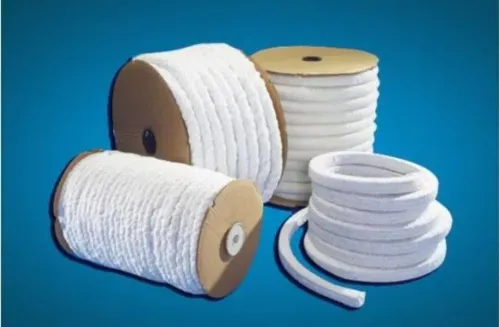
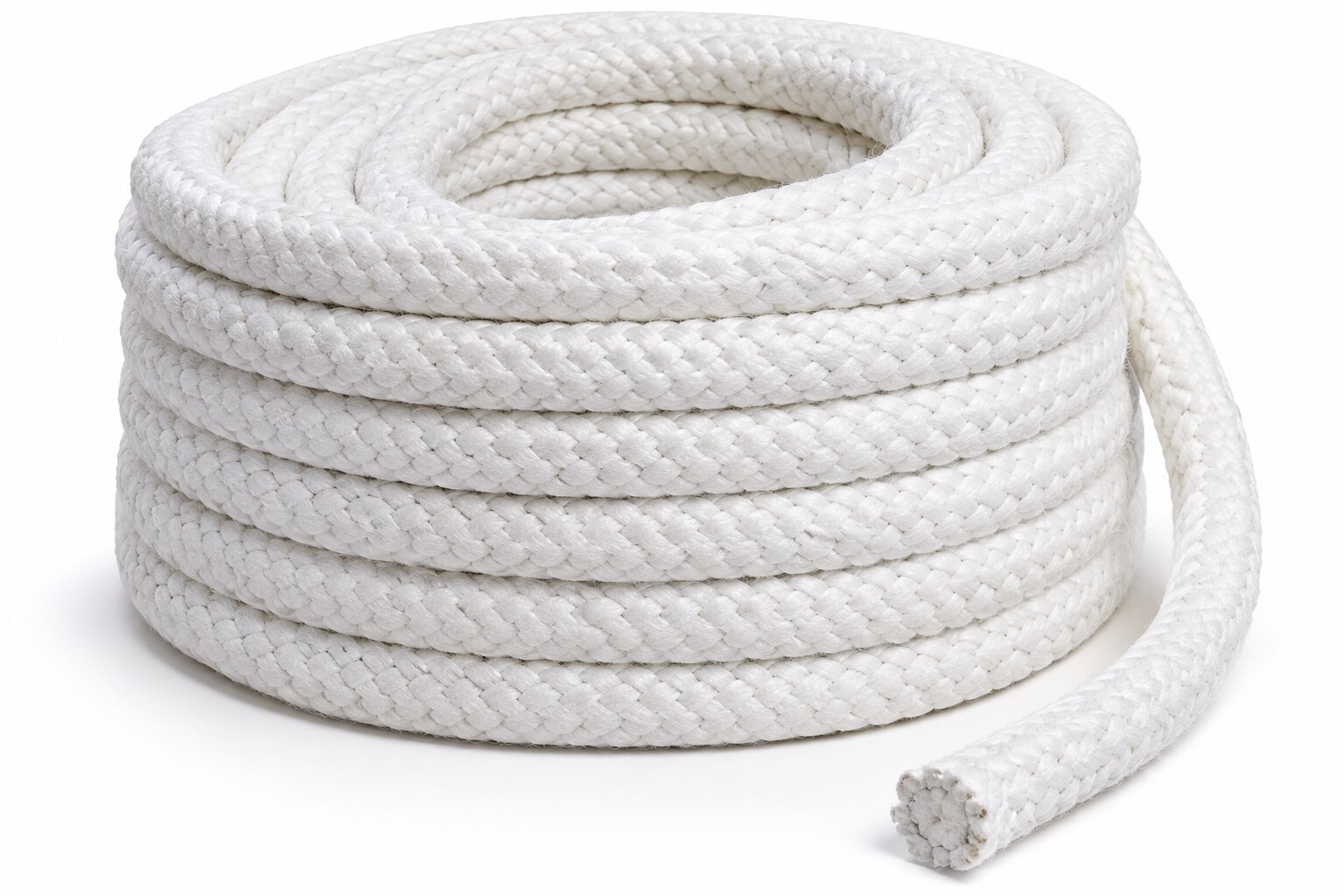
A ceramic-fiber rope is useful when a furnace team needs a compliant seal around a door, hatch, flange, or access opening, but it is not a universal refractory repair material. You will be able to match the rope to the joint, check its real temperature and movement limits, install it without creating new leakage, and reject unsuitable applications before shutdown work begins.
Key takeaways
- Use ceramic fiber rope for controlled static joints, not furnace reconstruction.
- Verify continuous service temperature and heat exposure before selecting a rope.
- Measure the real joint gap and allow compression without crushing the rope.
- Specify movement, abrasion, flame, pressure, size, and test requirements before buying.
Where Ceramic Fiber Rope Works—and Where It Does Not
Ceramic fiber rope suits furnace maintenance when the job is to close a controlled joint, not rebuild the furnace. It acts as a compressible contact seal around furnace doors, inspection covers, hatches, burner access panels, kiln doors, refractory access doors, and hot-gas-side static joints.
| Maintenance location | Suitable role | Where it stops being suitable |
|---|---|---|
| Furnace door, kiln door, hatch, or access panel | Fills the closing gap and limits hot-gas leakage | It is not a substitute for thick ceramic-fiber blanket or board across a large open gap |
| Burner opening or refractory access door | Forms a flexible seal around an irregular, repeatedly closed opening | Continuous rubbing, sharp edges, or frequent sliding can abrade the braid and expose the fiber |
| Static flange or expansion-joint cover | Provides compliant packing where the joint moves slightly or closes against the rope | High tensile loading can pull the rope apart instead of compressing it |
| Boiler refractory door or inspection opening | Seals the hot-gas side of the opening | It is not automatically suitable for a steam-pressure boundary, water-side gasket, or pressure-vessel flange |
Ceramic fiber rope for furnace maintenance is therefore a gasket-like maintenance component, not a structural refractory, permanent lining, or pressure-rated sealing system. Confirm the mechanical duty separately from the temperature rating.
New rope can contain an organic binder that smokes or burns out during first heat-up. Ventilate the area and follow the supplier’s controlled dry-out procedure. A protected groove, retainer, or compatible textile or metal overbraid helps when door movement would otherwise wear the braid.
Check the Service Temperature, Not Just the Product Grade
A rope marked 1,260 °C can still fail in a furnace door joint because that figure may describe the ceramic fibre, not continuous service or the braid holding it together. Select a high temperature ceramic rope against the joint’s actual temperature, load, atmosphere, and movement.
| Detail | What to verify | Why it matters |
|---|---|---|
| Fiber grade | Alumina-silica composition and stated fibre service temperature | The fibre rating does not establish the assembly’s safe working temperature |
| Temperature basis | Maximum-use temperature and continuous-use temperature, plus peak duration | A short heat excursion is not equivalent to constant exposure |
| Reinforcement | Glass-fibre, stainless-steel wire, or another carrier; construction limit | Glass reinforcement can lose strength before the ceramic fibre does |
| Braid and profile | Round, square, or twisted form; braid density; diameter; textile or metal outer covering | Shape and braid control compression, flexibility, abrasion resistance, and leakage |
| Operating conditions | Furnace atmosphere, flame or molten-material contact, tensile load, and heat-up/cool-down cycling | Oxidation, thermal shock, and repeated cycling shorten service life |
| Joint design | Required compression, groove dimensions, contact width, and mating-surface condition | An oversized or under-compressed rope leaks; an over-compressed rope loses resilience |
Ask for the temperature of stitching, jacket, and carrier separately. Specify whether the rope remains static or cycles with every door opening, then check that it retains flexibility after heating. Continuous rubbing, sharp edges, and high tension disqualify an exposed braid; use a protected groove or retainer instead.
Size and Install the Rope Around the Real Joint
Measure the closed joint, not the old rope. With the door or cover latched, record the gap at the four corners, along each side, and beside hinges or latches using feeler gauges.
Use the smallest and largest readings to specify rope size; ceramic rope for kiln doors must fill the working gap without preventing the door from seating.
1. Clean out ash, failed gasket, and loose refractory. Repair a warped frame or damaged groove before fitting rope; new packing will not correct a bent contact surface.
2. Ask the supplier for the rope’s recommended compressed thickness and allowable compression range. Do not choose a diameter by nominal gap alone. Oversized rope holds the door open, while undersized rope loses contact after heat cycles.
3. Cut each length square and leave the joint on a straight, accessible section rather than at a corner. Follow the supplier’s minimum bend radius; a tight turn can kink the braid and create a leak path.
4. Fit the rope continuously into its channel or against the designated sealing land. Use the specified ceramic adhesive, stainless retaining wire, pins, clips, or retainer—not ordinary steel staples or combustible glue.
5. Close and latch the door, then inspect the contact imprint around the full perimeter. A bright gap, loose braid, or local scorching identifies poor compression or leakage; correct it before firing.
Keep the rope as a compliant contact seal, not the sole insulation across an open gap. If the joint is a steam-pressure boundary or water-side gasket, use the pressure-approved sealing system instead.
Account for Movement, Abrasion, Flame, and Boiler Pressure
Treat ceramic rope as a compressible contact seal, not a permanent lining. It works best in a static or repeatedly closed joint that compresses the rope evenly; movement, rubbing, and unsupported spans shorten its life quickly.
- Repeated door sliding or slamming abrades the braid and exposes the fibre.
- Sharp refractory edges cut the covering during closure.
- Tensile loading stretches or pulls the rope out of its groove.
- A protected groove, retainer, or compatible textile or metal overbraid helps where movement cannot be eliminated.
Direct flame, high-velocity hot gas, molten slag, and metal splash can erode the covering at one concentrated spot. A new rope can also smoke while its organic binder burns out, so ventilate the area and follow the supplier’s controlled dry-out or first-heat procedure.
After heating, inspect the contact pattern; an open braid, damaged corner, warped surface, or inadequate compression can leak hot gas despite an adequate fibre temperature rating.
Pressure is a separate suitability limit. Ceramic rope for boiler maintenance can seal a refractory access opening or hot-gas-side static joint, but it is not a steam-pressure boundary, water-side gasket, or pressure-vessel flange seal without an approved sealing system.
Reject it where a large gap, major heat leak, pressure load, or continuous movement requires board, blanket, engineered packing, or a pressure-rated gasket.
Build a Fit-for-Service Procurement Specification
Send the supplier a written application specification before the shutdown, not a request for “high-temperature ceramic rope.” Approve the material only when the reply matches the joint, movement, and heating cycle.
1. State the required profile and construction: round, square, or twisted rope; nominal diameter or cross-section; ceramic-fibre type; density; reinforcement wire or carrier; textile or metal outer covering; tensile strength; and compressibility.
2. Demand two temperature figures: continuous-use temperature and maximum intermittent or peak temperature. Ask for the test basis, furnace atmosphere, exposure duration, heat-up and cool-down limits, and the temperature rating of the fibre, stitching, jacket, and reinforcement separately.
3. Describe the joint in measurable terms: groove dimensions, target compression, minimum bend radius, static or repeatedly cycled operation, flame or molten-material contact, rubbing, and pressure. Reject a quoted rope if the supplier has not confirmed suitability for those conditions.
4. Request a current datasheet, declared composition, dimensional tolerances, batch number, certificate of conformity, storage life, packaging and storage instructions, and a controlled dry-out procedure for any organic binder that will smoke during first heating.
5. Require a sample for trial fitting and written confirmation that the delivered braid and reinforcement match the approved sample. Compare Shiv Sales Corporation with any ceramic fiber rope supplier in Delhi using these documents, not delivery speed alone.
Local stock can shorten shutdown delays, but it cannot replace this fit-for-service approval.
Related product
 | Ceramic Product In the field of insulation materials, ceramic products play an important role in providing high-temperature resistance and efficient thermal... View product → |
Frequently asked questions
Where does ceramic fiber rope work in furnace maintenance?
It works as a compressible contact seal around furnace doors, inspection covers, hatches, burner access panels, kiln doors, refractory access doors, and hot-gas-side static joints. It is not a substitute for rebuilding damaged refractory or sealing a joint that requires a rigid structural repair.
How should you check the service temperature of ceramic fiber rope?
Check the manufacturer’s continuous service temperature, not only a grade or maximum classification temperature. Compare it with the joint’s sustained temperature, startup and shutdown cycles, flame exposure, and hot-gas conditions.
How do you size ceramic fiber rope around a furnace joint?
Measure the actual gap at operating and cold conditions, then select a rope diameter that compresses enough to contact both surfaces without crushing. Account for joint movement, uneven surfaces, and the installation method.
Is ceramic fiber rope suitable for moving, abrasive, or pressurised joints?
Use it cautiously where the seal faces move, rub, or carry boiler pressure. Movement and abrasion can wear the rope, while pressure can force it out of the joint. Select a design that restrains the rope and verify the seal under operating conditions.
What should a procurement specification for ceramic fiber rope include?
State the rope construction, diameter, length, continuous service temperature, fibre or material grade, joint application, compression requirement, exposure to flame and hot gases, movement, abrasion, pressure, packaging, batch identification, and required test or conformity documents.
Keywords