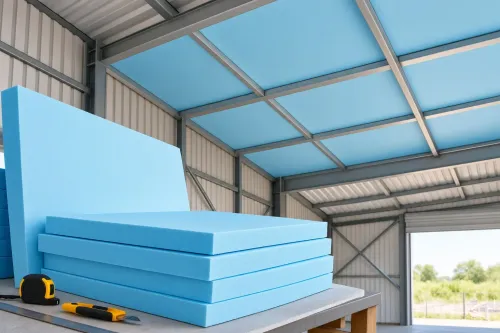


Metal sheds are widely used for warehouses, factories, workshops, logistics facilities, and commercial structures. Their construction can be practical and economical, but the roof can become a major source of heat gain during summer.
Choosing suitable shed roof insulation material can help reduce unwanted heat transfer. The challenge is identifying the right insulation type for the roof structure, operating environment, and expected performance.
Why Metal Sheds Become Hot
Metal roofing absorbs solar radiation and can reach high surface temperatures under direct sunlight.
The problem becomes more noticeable in large sheds because they generally have:
- Large roof areas
- Lightweight construction
- High internal volumes
- Machinery producing additional heat
- Limited thermal resistance
Without adequate insulation, heat from the roof can move into the building and make working conditions uncomfortable.
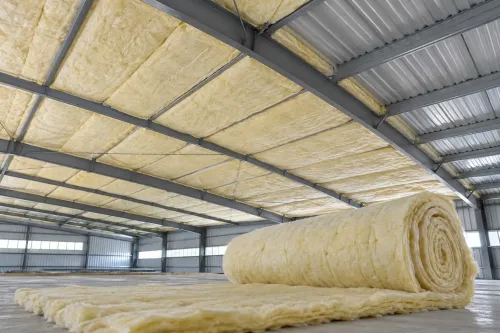
Glasswool for Shed Roofs
Glasswool can provide a fibrous thermal barrier and is commonly considered for roofing applications.
Its performance depends on factors such as thickness, density, thermal conductivity, facing, and installation quality.
For large industrial roofs, contractors should also consider the quantity required and the method of securing the material.
Reflective Bubble Insulation
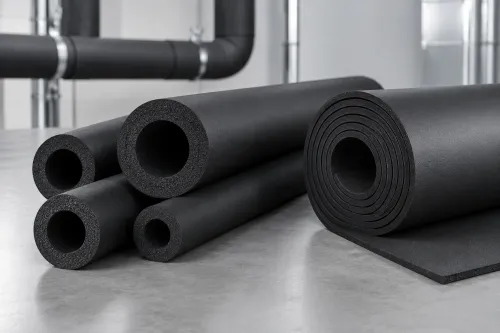
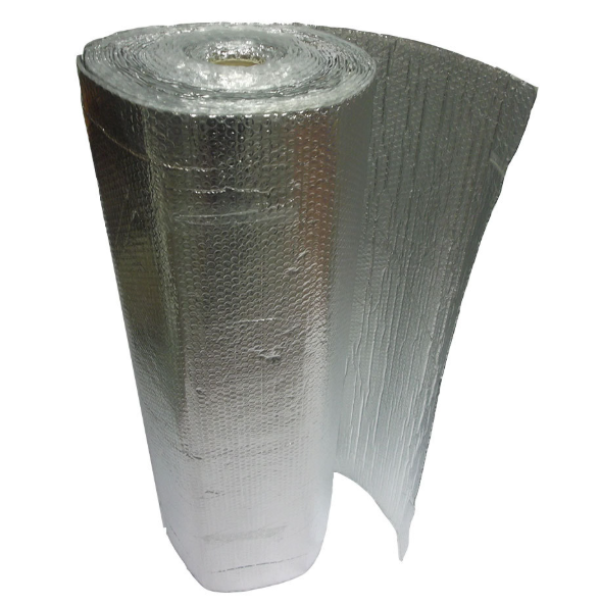
Bubble foil insulation provides a lightweight alternative for certain roofing applications. Its reflective surface helps reduce radiant heat transfer when installed correctly with the necessary air space.
A reflective bubble insulation roll can be useful where limited installation depth or lightweight construction is a priority.
However, reflective insulation should not automatically be treated as a direct substitute for thicker fibrous insulation. The two systems work differently.
Rockwool for Sheds
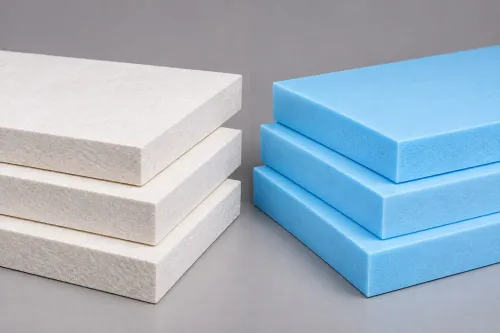
Rockwool thermal insulation can be considered when a mineral fibre solution with particular thermal, acoustic, or fire-related characteristics is required.
Rockwool insulation slabs can provide a more rigid format and may be appropriate for certain wall and roof assemblies.
The choice between glasswool and rockwool should depend on the actual construction and performance requirements.
Questions to Ask Before Buying
Contractors and warehouse owners should establish:
What type of roof is installed?
Metal sheets, composite panels, and other roofing systems may require different approaches.
How severe is the heat problem?
Indoor temperature measurements can help determine whether roof heat gain is a major concern.
Will the building be air conditioned?
Cooling requirements can influence insulation selection.
Is sound control also needed?
Machinery and industrial operations may create substantial noise.
What installation space is available?
Roof geometry and structural members can limit insulation options.
Delhi's Shed Roofing Environment
Industrial and warehouse structures across Delhi and NCR can face substantial summer heat loads. Proper roof insulation can therefore be an important consideration during new construction, renovation, or roof improvement projects.
Local procurement can also help contractors coordinate large quantities and different material requirements.
Shiv Sales Corporation supplies insulation products for construction and industrial applications, supporting project teams in evaluating suitable materials for specific roofing conditions.
The best shed roof insulation material is not simply the lowest-priced option. The correct choice depends on roof construction, thermal requirements, available space, installation conditions, and the intended use of the building.