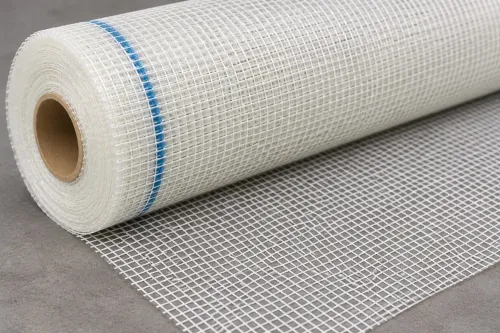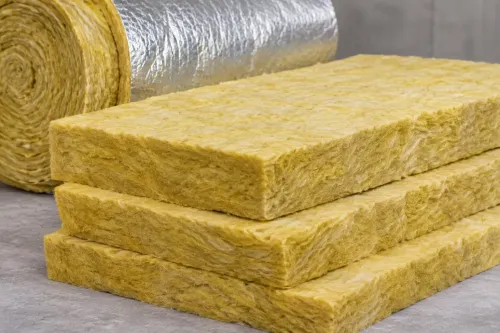
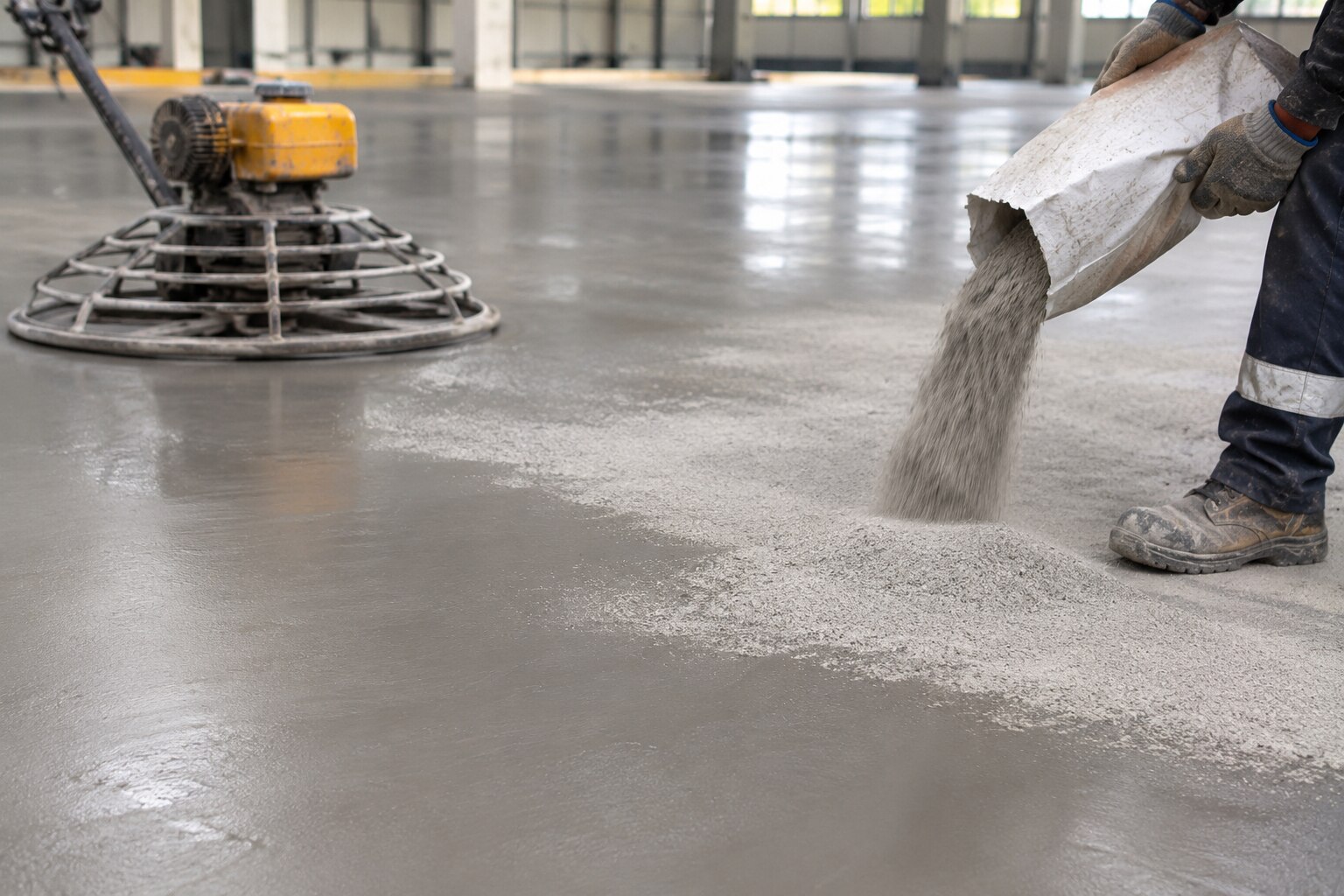
The right grade depends on wheel type, axle load, turning frequency, impact, abrasion, moisture and chemical exposure—not simply whether the building is called a warehouse or factory. By the end, you will be able to match those conditions to a hardener type, check whether the slab is ready, and estimate what information to request before ordering.
Key takeaways
- Match hardener grade to wheel loads, turning frequency and dropped-object impact.
- Use metallic hardeners for severe abrasion, impact and heavy industrial traffic.
- Check slab strength, bleed water and timing before applying a dry shake.
- Specify coverage, aggregate type, application rate and curing requirements before ordering.
Start with the traffic and damage your slab must withstand
Start with the damage, not the product name. To decide which industrial floor hardener is right for a facility, record traffic intensity, wheel type, axle loads, turning frequency and impact from dropped goods.
A dry-shake hardener improves the concrete surface zone’s abrasion and dusting resistance; it cannot repair weak concrete, poor subgrade support, inadequate reinforcement or uncontrolled cracking.
- Count forklift and pallet-jack movements during the busiest shift.
- Identify hard wheels, steel wheels, solid tyres and loaded vehicles.
- Record dropped items such as coils, tools, pallets or metal components.
- Mark areas exposed to water, chlorides, oils, chemicals or outdoor weather.
| Traffic and damage profile | Suitable starting direction | Main caution |
|---|---|---|
| Light office, retail or pedestrian traffic | Non-metallic mineral hardener or silicate densifier | Do not pay for metallic performance you will not use |
| Regular warehouse forklifts and pallet jacks | Heavy-duty non-metallic dry-shake grade | Confirm concrete strength and joint detailing |
| Severe abrasion, hard wheels and impact | Metallic dry-shake grade | Moisture or chlorides can corrode particles and stain the floor |
| Chemical spills, washdown or aggressive service | Resinous or chemically resistant system | A hardener alone does not provide chemical resistance or waterproofing |
A metallic grade is not automatically the strongest choice for every warehouse. Select it only when abrasion and impact justify its corrosion and staining risk.
Delhi’s heat, dryness and wind can evaporate slab moisture quickly, causing plastic-shrinkage cracks, poor integration and delamination. Specify wind protection, evaporation control and curing with the application plan; retain proper joint spacing, depth, timing and sealant because the hardener will not stop joint or reflective cracking.
Match the floor hardener type to the performance you need
Select the system by the damage you need to prevent, not by the word “industrial.” Abrasion from forklifts needs a different surface from chemical attack, impact, dusting or water exposure. These floor hardener types are not interchangeable, and none repairs a weak slab or removes the need for correctly detailed joints.
| System | Protects against | Best fit and limits |
|---|---|---|
| Metallic dry shake | Severe abrasion, wheel loading and impact | Heavy manufacturing and steel-handling areas; corrosion or rust staining can occur where moisture reaches the metal |
| Non-metallic mineral dry shake | Abrasion, dusting and rubber-tyred traffic | Warehouses, commercial floors and ordinary forklift routes; it does not provide chemical resistance or waterproofing |
| Liquid silicate densifier | Dusting and moderate abrasion | Existing concrete and pedestrian or light-traffic areas; it adds no substantial wearing thickness and will not bridge cracks |
| Resinous epoxy or polyurethane | Chemicals, oil, stains and liquid penetration | Workshops, process rooms and wash-down zones; poor surface preparation or slab moisture can cause peeling or blistering |
| Polished concrete | Dusting, abrasion and cleanability | Retail, offices and commercial circulation; polishing is not waterproofing and offers limited protection from aggressive chemicals or impact |
For a mineral dry shake, 3–5 kg/m² suits much general-duty work; heavier mineral or metallic grades need the approved rate for the aggregate, concrete mix, traffic and finishing method. In Delhi’s hot, dry, windy conditions, evaporation control and curing protect integration as much as the selected grade.
Choose by facility zone and Delhi service conditions
Warehouses and retail premises usually need a non-metallic mineral hardener or silicate densifier; metallic grades add corrosion risk without value under light wheel traffic. Select the industrial floor treatment options by zone:
| Zone | Suitable option | Why or caution |
|---|---|---|
| Warehouse | Non-metallic dry shake; metallic for severe hard-wheel routes | Use metallic only where abrasion and impact justify it, and keep moisture or chloride exposure controlled. |
| Manufacturing plant | Metallic dry shake or resinous topping | Choose resin for chemicals, oils, hygiene, or a defined slip-resistant texture. |
| Loading bay | Metallic dry shake or heavy-duty resinous system | Expect pallet impacts, hard wheels, moisture and dropped materials; protect joints and edges as carefully as the surface. |
| Workshop | Non-metallic hardener or epoxy/polyurethane topping | Use resin where oil, solvents, cleanability or slip resistance matters. |
| Cold store | Compatible epoxy, polyurethane or cementitious-resin topping | Assess substrate moisture and service temperature before installation; a dry shake alone does not provide impermeability. |
| Parking deck | Non-metallic hardener for sheltered concrete; resinous waterproofing system where exposure demands it | Check water entry, vehicle turning and surface texture. |
| Retail premises | Silicate densifier or non-metallic mineral hardener | Metallic material is disproportionate for light service traffic. |
Delhi’s hot, dry weather and wind can evaporate mixing water before a dry shake integrates. Schedule placement to limit exposure, control wind, manage evaporation and cure promptly; otherwise the surface can crack, dust or debond. For food, pharmaceutical and wet-process zones, specify coving, drainage, chemical resistance, cleanability and slip resistance before abrasion resistance.
A hardener cannot repair poor slab design, weak subgrade or uncontrolled cracking.
Confirm the slab is ready before applying a dry shake
A dry-shake hardener will bond only when the concrete is strong, well-compacted and still receptive at the surface. It improves abrasion and dust resistance; it cannot correct poor subgrade support, inadequate reinforcement, uncontrolled cracking, bad joint layout or defective curing. That distinction matters when specifying a floor hardener for commercial buildings.
Confirm these conditions and follow this sequence:
1. Place and compact the concrete to the approved slab design. Remove laitance, oil, loose material and standing bleed water; do not broadcast onto a watery surface.
2. Wait until bleed water has disappeared, but apply the dry shake while the slab still holds enough moisture for integration. Broadcasting too early dilutes and segregates the hardener. Waiting too long prevents proper incorporation and encourages delamination.
3. Broadcast the specified non-metallic or metallic grade in measured passes rather than dumping the full dose in one pile. Use the coverage rate from the product data sheet and keep distribution uniform, especially beside columns, walls and joints.
4. Float the first broadcast into the surface after it darkens from absorbed moisture, then apply the remaining material in a second broadcast-and-float stage. Do not add water to revive a late surface; the result can be a weak, dusty skin.
5. Finish with power trowels only after the hardener has integrated, then cure the slab using the specified curing method. Saw-cut joints at the planned time and depth, because the hardener does not prevent shrinkage cracks or joint-related damage.
Turn the selection into a material and procurement specification
Write the purchase order around measured floor area, approved application rate and traceable batches—not “one floor hardener.” Calculate net quantity as area in m² multiplied by the specified kg/m², then add a separately stated allowance for edges, losses and test panels.
1. State the grade and use: non-metallic mineral or metallic, target coverage rate in kg/m², colour, packaging unit, and whether the rate applies to one or two broadcast stages.
2. Ask the supplier to confirm the rate against your concrete mix, aggregate, finishing method, forklift wheel type, axle load and turning frequency. A 3–5 kg/m² mineral rate is a starting range, not an approval for every floor.
3. Require the technical data sheet, safety data sheet, application method, storage limits, shelf life, batch number, manufacturing date, certificate of analysis and written compatibility limits. Include joint-edge detailing; the hardener must not bridge joints.
4. Demand evidence for abrasion performance, such as ASTM C779 or ASTM C944 results, plus compressive-strength and impact data where those properties govern selection. Approve a site mock-up and record coverage, finish, curing and surface defects before releasing the full order.
5. Ask how the supplier handles rejected or damaged bags, batch variation, delivery moisture exposure and unused material. If Shiv Sales Corporation is quoting, give it the same specification and request confirmation that every delivered bag matches the approved batch documentation.
For resinous systems, add ASTM F2170 in-situ relative-humidity results or ASTM F1869 vapour-emission results; a dry-looking slab is not a moisture clearance. Keep delivery quantities, test reports and the signed mock-up approval with the purchase order.
Related product
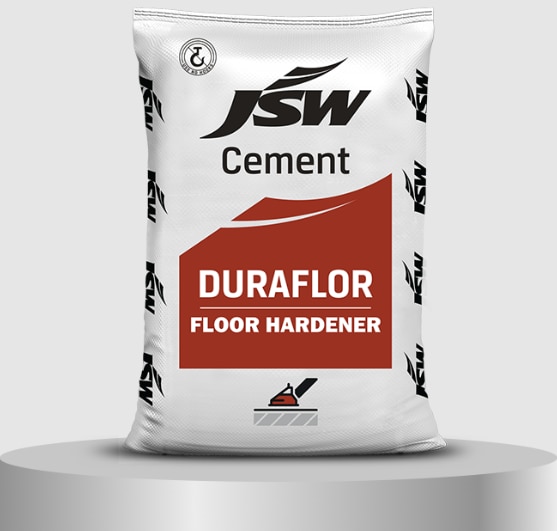 | Floor Hardener – High-Strength Industrial Floor Treatment Floor Hardener – High-Strength Industrial Floor Treatment Floor Hardener from Shiv Sales Corporation is a premium, ready-to-use metallic or non-metallic surface hardener designed to increase the durability... View product → |
Frequently asked questions
Which industrial floor hardener is right for a facility?
Choose it from traffic intensity, wheel type, axle loads, turning frequency and impact from dropped goods, then match those demands to the hardener type.
What are the main floor hardener types?
The main options are cementitious mineral dry shakes, non-metallic aggregate hardeners and metallic hardeners. Compare abrasion resistance, impact resistance, finish and corrosion considerations.
Which floor hardener suits commercial buildings?
Use a cementitious or non-metallic hardener for offices, retail areas, warehouses and commercial loading zones when traffic and impact remain moderate.
What must you check before applying a dry-shake floor hardener?
Confirm the concrete has adequate strength, the bleed water has evaporated, the surface remains workable and application timing matches the specified method.
Keywords