A nitrile product is not automatically suitable for every pipe, duct, or plant-room surface in Delhi. You will be able to match the insulation to the service, climate exposure, thickness requirement, installation detail, and project specification before accepting a quotation or starting work.
Key takeaways
- Use closed-cell nitrile on cold pipes, ducts, bends, joints, and refrigerant lines.
- Compare vapour resistance, temperature range, thickness, fire rating, and installation access.
- Size thickness from surface temperature, indoor humidity, pipe diameter, and condensation risk.
- Seal every longitudinal seam, butt joint, hanger gap, and valve connection.
Which Delhi HVAC surfaces suit closed-cell nitrile insulation?
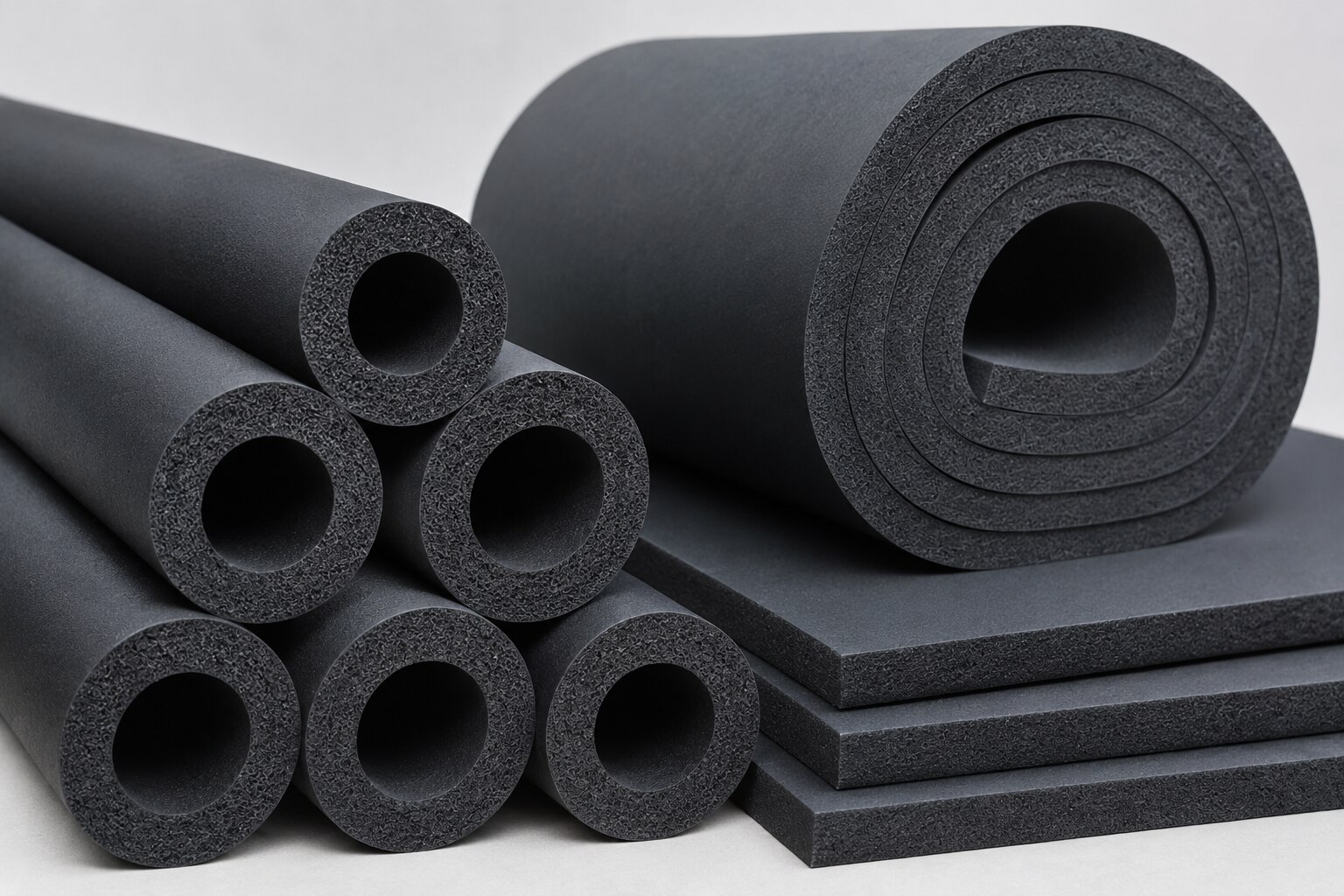
The direct test is simple: choose flexible NBR-based elastomeric foam where cold surfaces need continuous vapour-barrier protection and the route contains bends, joints, or tight access. That makes it strong for these closed cell insulation HVAC applications:
| Surface | Suitability | Required treatment |
|---|---|---|
| Chilled-water pipes | Strong fit | Seal every longitudinal and butt joint |
| VRF and split-AC refrigerant lines | Strong fit | Check actual operating and shutdown temperatures |
| Fan-coil connections, drain lines, fittings, and retrofit routes | Strong fit | Avoid stretching, gaps, and crushed sections |
| Rectangular ducts | Conditional | Use carefully formed sheets with sealed corners, flanges, hangers, and access panels |
| Valves, strainers, branch connections, and plant-room equipment | Conditional | Detail with shaped sheets, removable sections, or an additional vapour seal |
Delhi’s hot summer raises ambient heat gain, while monsoon humidity attacks any open seam around a cold indoor pipe. Dusty ceiling voids expose adhesive and joints to contamination; cold surfaces then condense moisture when the vapour barrier fails. Rooftop solar exposure and outdoor weathering require weatherproof jacketing or a tested protective finish.
Do not treat nitrile as a default for steam, hot oil, or very-high-temperature heating services; use it only when the exact product rating permits. The practical conclusion of nitrile insulation suitability HVAC decisions is clear: choose nitrile for condensation control, flexibility, and sealed continuity—not merely because a label says closed cell.
What should you compare before choosing nitrile over other HVAC materials?
Thermal conductivity alone does not justify choosing nitrile. For nitrile insulation for HVAC workers in Delhi, request ASTM C534/C534M test information for the exact sheet or tube and tested thickness:
- Thermal conductivity at a stated mean temperature, density, dimensions, water-vapour permeability, water absorption, and burning characteristics.
- Continuous operating-temperature range, short-term limit, fire classification and test method, plus acoustic data where noise control matters.
- UV and ozone resistance, facing details, and adhesive compatibility with the insulation, pipe coating, refrigerant, and oil.
NBR/PVC formulation, density, cell structure, facing, adhesive, and refrigerant or oil compatibility matter more than the word nitrile.
| Material | Advantage | Trade-off |
|---|---|---|
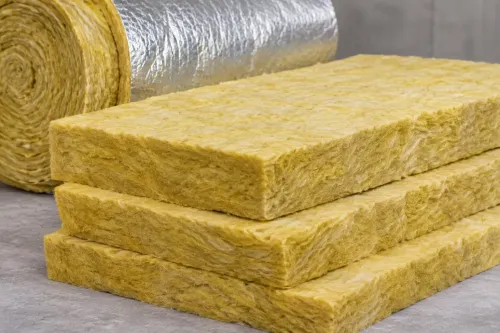
| Fibreglass or mineral wool | Ducts and higher-temperature work | Cold services need a continuous vapour retarder |
| Polyethylene foam | Economical for lighter-duty applications | Narrower performance envelope |
| EPDM elastomeric foam | Broader temperature or weathering performance, depending on formulation | Verify compatibility and cost |
| Polyurethane or PIR | High thermal resistance | Rigid, joint-sensitive detailing |
| Nitrile elastomeric foam | Flexible, sealed condensation control on ordinary cold HVAC services | Rating and fire performance remain product-specific |
Compare these HVAC insulation materials in Delhi by verified figures, not catalogue labels. Check the actual fire test, classification, thickness, and adhesive system; “Class O” without those details proves little. Reject nitrile for steam, hot oil, or very-high-temperature work when its tested limits do not cover the service.
For ducts or acoustic priorities, mineral wool may win; for tight pipe bends and sealed joints, nitrile may save labour.
How do you select nitrile insulation thickness for pipes and refrigerant lines?
Pipe diameter is only one input. Select thickness from pipe or fluid surface temperature, indoor air temperature, relative humidity, external surface conditions, insulation thermal conductivity, line location, and vapour-barrier quality.
A thickness that stays dry in a dry plant room can sweat in a humid, poorly ventilated ceiling void; an exposed rooftop run adds solar heat, weather, and damaged-joint risks.
For chilled-water pipes, check design supply and return temperatures, room conditions, and shutdown temperature before selecting thickness. For refrigerant lines, check actual suction, liquid, and discharge-line temperatures during operation and shutdown; do not rely on a generic catalogue range.
In closed cell nitrile insulation for hvac trades in delhi, the same nominal thickness performs differently across these locations.
- Obtain the consultant’s heat-gain or condensation-control calculation.
- Check the applicable ECBC, state, local, or project specification basis.
- Verify conductivity at a stated mean temperature, not only nominal thickness.
- Inspect seams, clamps, ends, and penetrations: added thickness cannot fix an open longitudinal seam, crushed clamp area, unsealed end, or exposed penetration.
Specify minimum thickness together with thermal conductivity at a stated mean temperature; never issue a thickness-only requirement.
How should trades install nitrile insulation so condensation does not return?
Condensation returns through gaps, lifted seams, crushed supports, and unsealed penetrations—not through an intact closed-cell structure. Treat closed cell insulation hvac applications as a continuous vapour-barrier installation.
- Clean and dry the pipe, removing oil, dust, rust, and moisture.
- Measure without stretching the insulation. Cut squarely with a sharp blade.
- Apply the manufacturer-approved adhesive to longitudinal and butt joints.
- Close every seam fully, stagger joints, and seal ends, penetrations, and drain-line connections.
- Form separate pieces carefully around valves, strainers, tees, branch connections, and access points.
- Let the adhesive cure for the specified time before exposing the system to moisture.
Tape alone cannot replace a bonded vapour barrier on cold services. Around wall and floor penetrations, close the annular gap and bond the insulation to the sleeve or adjacent vapour barrier.
At pipe clamps, use a compatible load-bearing insulated insert or engineered support so the insulation is not crushed. Continue the vapour barrier across the support transition; a bare clamp creates a cold bridge and a condensation path.
For rectangular ducts, lay sheets or boards with staggered joints, seal longitudinal and butt seams, treat corners with accurately cut pieces or approved corner details, and seal flanges, hangers, access panels, and inspection doors. Add reinforcement where hangers or fixings could compress the insulation.
Inspect before concealment:
- Gaps, lifted seams, damaged surfaces, or wet insulation
- Crushed clamp areas and unsupported joints
- Unsealed valves, penetrations, access points, and drain connections
- Complete adhesive bonding and cured seams
What should a Delhi HVAC purchase specification and site decision include?
Put the bid specification before the product name. Require the supplier to identify:
- Form, dimensions, minimum thickness, density, and thermal conductivity at a stated mean test temperature under ASTM C534/C534M.
- Water-vapour permeability, water absorption, continuous and short-term operating-temperature limits, and the required fire-test classification and method.
- Adhesive, sealant, facing, UV/weatherproofing method, and compatibility with the actual refrigerant, oil, cleaning chemicals, and pipe coating.
- Certificates for the exact product, tested thickness, facing, and adhesive. Reject an unsupported “Class O” claim; tie fire acceptance to the specified Indian or project fire standard and installation.
Inspect bonded seams, end seals, supports, valves, strainers, penetrations, duct flanges, access doors, and outdoor jacketing. A crushed clamp or open penetration can return condensation despite correct thickness.
| Condition | Prefer | Reason |
|---|---|---|
| Ordinary cold HVAC lines, sealed indoors | Nitrile | Flexible vapour-barrier detailing |
| Steam, hot oil, high-temperature heating | Mineral wool or calcium silicate | Nitrile is unsuitable beyond its verified rating |
| Severe outdoor weathering | EPDM or protected nitrile | Select proven UV, ozone, and weather resistance |
| Tight space with high thermal resistance required | Polyurethane or PIR | More resistance per millimetre, but rigid joints demand care |
Choose mineral wool where acoustic absorption or higher temperature governs. For HVAC insulation materials in Delhi, Shiv Sales Corporation can help match the specified material and accessory system to drawings and site conditions; verify everything against reports.
For nitrile insulation suitability, HVAC buyers should choose nitrile for ordinary cold services only when the complete sealed system is specified and installed. Choose another system when temperature or exposure exceeds verified limits.
Related product
 | Nitrile Insulation – Closed-Cell Thermal & Acoustic Insulation Nitrile Insulation – Closed-Cell Thermal & Acoustic Insulation Nitrile Insulation from Shiv Sales Corporation is a high-quality closed-cell elastomeric insulation designed for superior thermal efficiency and... View product → |
Frequently asked questions
Which Delhi HVAC surfaces suit closed-cell nitrile insulation?
It suits cold chilled-water pipes, refrigerant lines, ducts, valves, fittings, bends, and other surfaces where a continuous vapour barrier is needed.
What should you compare before choosing nitrile over other HVAC materials?
Compare thermal conductivity, water-vapour resistance, operating temperature range, fire performance, flexibility, thickness options, jointing method, and site access.
How do you select nitrile insulation thickness for pipes and refrigerant lines?
Base thickness on pipe diameter, fluid and surface temperature, indoor humidity, ambient temperature, route length, and the required condensation-control performance.
How should trades install nitrile insulation so condensation does not return?
Fit clean, dry surfaces closely; stagger joints; seal seams and ends with compatible adhesive; insulate supports and fittings; and repair every puncture.
What should a Delhi HVAC purchase specification and site decision include?
Specify NBR foam type, thickness, dimensions, temperature range, vapour resistance, fire requirement, adhesive, quantity, batch documents, and inspection checks.
Keywords