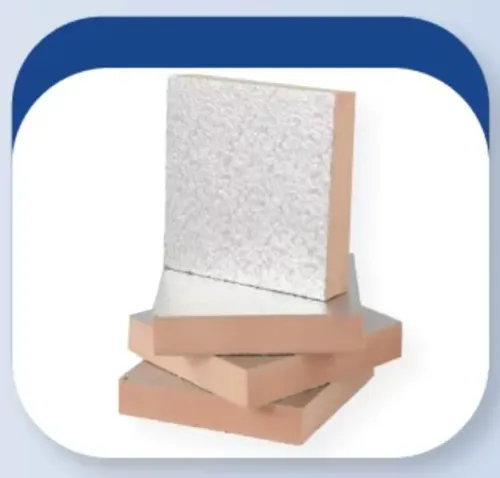
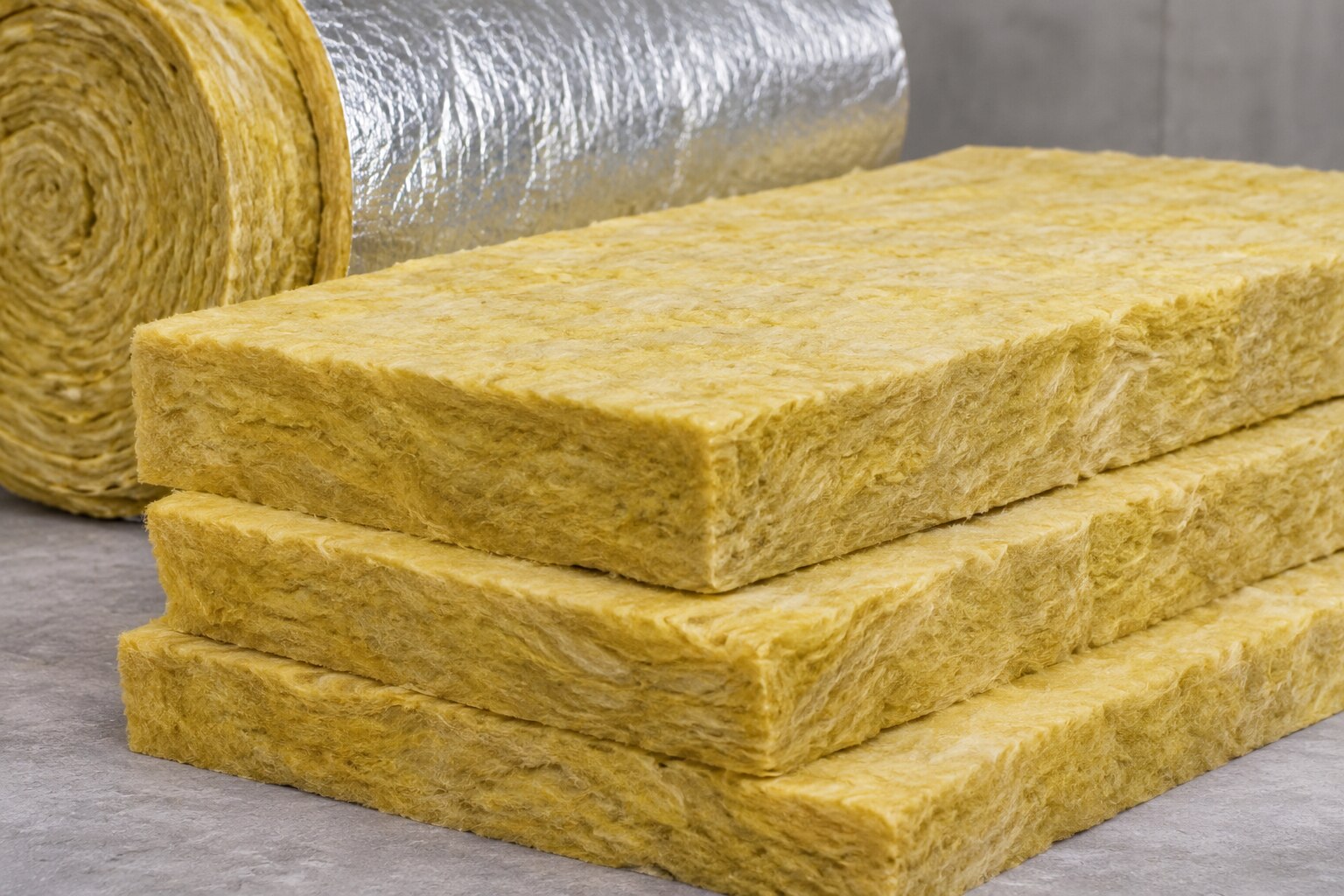
A Delhi project can receive the wrong mineral-wool product even when the quotation says only “mineral wool”: glass wool, rock wool, boards, rolls, pipe sections, and high-temperature products serve different duties. By the end, you will know how to define the specification, compare Delhi and NCR supply options, check delivered cost and documentation, and protect the material’s performance during installation.
Key takeaways
- Define fibre type, form, thickness, density, and facing before requesting quotes.
- Choose glass wool for lightweight insulation and rock wool for higher fire resistance.
- Compare thermal conductivity, fire classification, acoustic data, facings, and delivered cost.
- Verify stock, batch documents, delivery terms, and packaging before buying in Delhi NCR.
Define the mineral-wool product before contacting suppliers
“Mineral wool” is not a complete purchasing specification. A quotation could refer to rock wool, glass wool, or slag wool in rolls, blankets, rigid boards, loose fill, acoustic panels, or pipe sections. Send mineral wool suppliers in Delhi a project-specific RFQ containing:
1. State the application: HVAC duct, partition, roof, façade, equipment, pipe, or high-temperature insulation. Name the product form, required thickness, density, board or roll dimensions, and total quantity.
2. Specify the performance figures you need, including declared thermal conductivity or R-value, reaction-to-fire class, service-temperature range, water-repellent treatment, compressive strength, and acoustic target. Do not accept “high density” or “fire resistant” without values.
3. Identify the facing: unfaced, aluminium foil, foil scrim kraft, tissue, fabric, or another finish. Fire performance belongs to the exact faced product and assembly, so request the EN 13501-1 classification or the project’s named fire-test report.
4. If the offer cites EN 13162, request its Declaration of Performance and check the declared conductivity, thickness tolerances, reaction-to-fire class, and water-related properties.
5. Give the delivery address, floor, unloading restrictions, required date, and whether you want ex-warehouse, delivered, or installed pricing. For roofs, wet rooms, and exposed ducts, specify the separate vapour-control layer, waterproof membrane or cladding, drainage treatment, and sealed joints; mineral wool is not waterproofing.
Choose glass wool, rock wool, or a specialist form by application
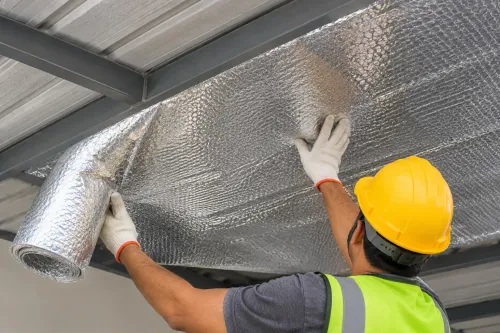
Glass wool suits low-to-moderate temperature building work because it is light, flexible, and easy to friction-fit. Rock wool suits rigid assemblies, higher temperatures, fire-rated construction, and places where greater density or compressive strength matters. The physical form matters as much as the fibre type.
| Application | Suitable type and form | Specify before ordering |
|---|---|---|
| HVAC ducts | Glass-wool duct board or faced blanket; rock-wool board for higher fire or temperature duty | Thickness, density, facing, allowable air velocity, erosion resistance, and sealed joints |
| Partitions | Glass-wool rolls or acoustic slabs | Thickness, acoustic rating, fire classification, and friction fit |
| Roofs and façades | High-density rock-wool boards | Compressive strength, water-repellent treatment, fixing method, facing, and weatherproof outer system |
| Industrial equipment | Rock-wool wired blankets, slabs, or removable insulation pads | Service-temperature limit, thickness, density, cladding, and access requirements |
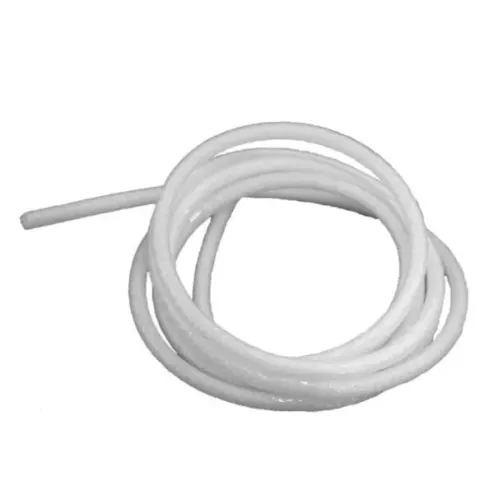
| Pipes | Preformed mineral-wool pipe sections | Pipe diameter, insulation thickness, temperature, vapour barrier, and outer jacketing |
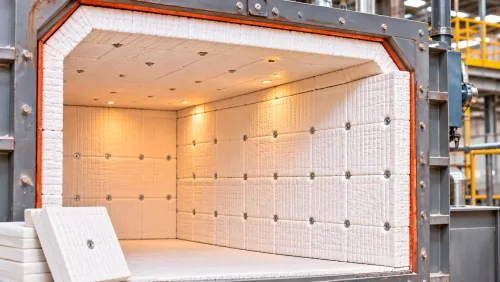
| High-temperature work | High-temperature rock wool; refractory ceramic fibre for temperatures beyond the mineral-wool limit | Maximum operating temperature, heat-up conditions, and exposure time |
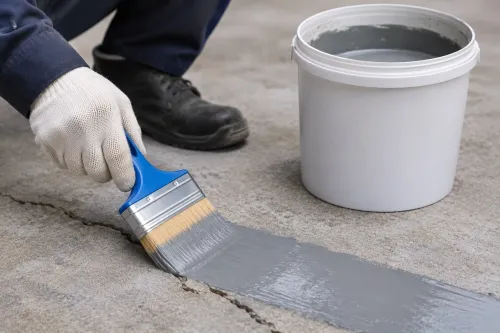
Do not wrap roof or façade mineral wool in the expectation that it provides waterproofing. Specify the membrane, vapour-control layer, drainage, and sealed cladding separately. If you plan to buy mineral wool in Delhi, ask for the exact trade name, thickness, density, facing, and service-temperature data rather than accepting “mineral wool” as a complete description.
Compare technical data, facings, thickness, and delivered cost
A lower rate per square metre does not prove a cheaper quotation. Compare both offers at the same thickness, coverage, facing, delivery point, and performance declaration before choosing.
| Performance | What to compare | Warning sign |
|---|---|---|
| Thermal | Declared thermal conductivity λD, thickness, and calculated R-value | One quote gives conductivity while the other gives only “thermal insulation” |
| Fire | Reaction-to-fire classification, test certificate, and service-temperature limit | “Fire resistant” appears without a classification or temperature |
| Moisture | Water-repellent treatment, short-term water absorption, vapour-control facing, and water-related data | The facing is named but its vapour or water function is not stated |
| Acoustic | Absorption coefficients by frequency or the tested assembly rating | Density alone is used to promise sound reduction |
| Mechanical | Density, compressive strength, dimensional tolerance, and support requirements | A soft blanket is offered where a rigid board is specified |
| Commercial | Pack coverage, delivered rate, freight, unloading, minimum order, and cutting waste | Ex-warehouse pricing is compared with a delivered quotation |
Request the product data sheet, safety data sheet, batch or lot number, declared thickness tolerance, facing description, and test certificates. Check whether both quotations cover the same square metres after compression in packing and installation waste.
For mineral wool availability in Delhi, confirm whether stock is in Delhi, Ghaziabad, Noida, Faridabad, or Gurugram. Add unloading restrictions, floor access, vehicle limits, and the required delivery date to the comparison; otherwise the apparent saving can disappear in freight and handling.
Check Delhi and NCR stock, documents, and delivery terms
“In stock” is meaningful only when it identifies the exact mineral-wool type, thickness, density, facing, quantity, and dispatch location. A mineral wool insulation distributor in Delhi may hold standard rolls in Delhi while sourcing high-density slabs from Noida or ordering specialist grades from a manufacturer.
1. Send the delivery address, floor, unloading limits, vehicle restrictions, required date, and full material schedule with your RFQ. Ask whether the price is ex-warehouse, delivered to site, or installed, and include freight, unloading, minimum order quantity, pack coverage, and cutting waste in the comparison.
2. Request a stock statement showing available quantity, batch number, pack condition, and dispatch location: Delhi, Ghaziabad, Noida, Faridabad, or Gurugram. Ask whether the quantity is loose stock, full-pack stock, or reserved against another order.
3. Require a written status for each line item: ready for dispatch, imported after purchase order, or subject to manufacturer lead time. Get the dispatch date, estimated arrival date, transport responsibility, and what happens if one item becomes unavailable.
4. Match documents to the offered material, not merely the brand. For EN 13162 products, request the Declaration of Performance and check the exact trade name, manufacturing site, thickness, declared thermal conductivity, thickness tolerance, reaction-to-fire class, and water-related properties.
Inspect wet packaging, crushed edges, punctures, deformed slabs, and missing labels before signing delivery. Photograph damage and record it on the delivery note rather than accepting it silently.
Protect the specified performance during delivery and installation
At receipt, treat wet, punctured, or crushed mineral wool as a performance problem, not cosmetic damage. During Delhi’s monsoon, inspect every pack before signing the delivery note and record rejected quantities with photographs.
- Require the delivery to match the purchase order: product type, thickness, dimensions, facing, density or grade, quantity, batch or lot label, and the declared application.
- Ask for the manufacturer’s handling instructions and safety data. Plan gloves, eye protection, ventilation, suitable respiratory protection where dust controls require it, and sealed disposal of cutting waste.
- Keep packs covered, dry, off the ground, and away from standing water. Do not stack them where their weight compresses slabs, deforms edges, or blocks access.
- Reject or quarantine saturated packs, missing labels, torn packaging, crushed edges, and permanently deformed slabs; do not accept them silently as equivalent stock.
- Cut with the recommended tool and allowance for a close, uncompressed fit. Do not force oversized pieces into cavities or leave gaps around framing, ducts, pipes, or penetrations.
- Install the specified supports, retainers, and spacing so insulation cannot slump. Seal joints, service penetrations, and facings with compatible tape, mastic, or the specified vapour or fire barrier system.
- Record concealed work with photographs before closing walls, ceilings, roofs, or cladding.
Ask mineral wool suppliers in Delhi, including Shiv Sales Corporation, to state these delivery and installation responsibilities in the quotation. That protects you when comparing delivered material with installation-inclusive offers and when you buy mineral wool in Delhi from NCR stock.
Related product
 | Mineral Wool Explore Advantages of Mineral Wool Insulation In the construction and building industry, selecting the right insulation material is essential for... View product → |
Frequently asked questions
What information should you send mineral wool suppliers in Delhi?
Send the application, mineral-wool type, product form, thickness, density, facing, required thermal or acoustic performance, fire classification, quantity, delivery location, and project schedule.
Should you choose glass wool or rock wool for a construction project?
Choose glass wool when low weight, flexible rolls, and general thermal or acoustic insulation suit the application. Choose rock wool when greater rigidity, higher-temperature resistance, or stronger fire performance is required. Confirm the product data for the exact application.
Which technical details should you compare between mineral wool products?
Compare declared thermal conductivity, density, thickness tolerance, fire classification, acoustic test data, moisture behaviour, facing type, compressive strength for boards, and pipe-section dimensions.
How can you check mineral wool availability and delivery in Delhi NCR?
Ask for available stock by exact product code, quantity, batch number, manufacturing date, packing dimensions, dispatch location, delivery lead time, freight charges, unloading terms, and replacement conditions for damaged packs.
Keywords