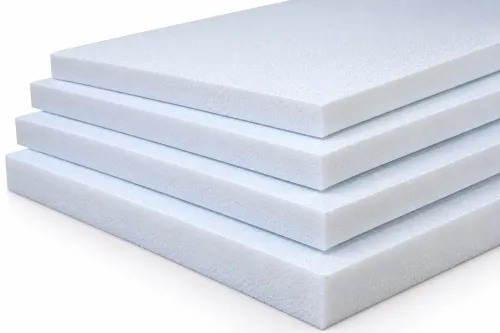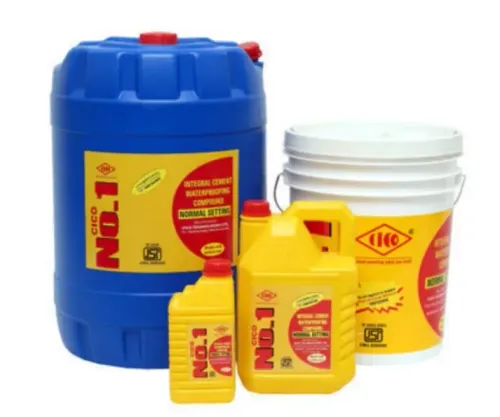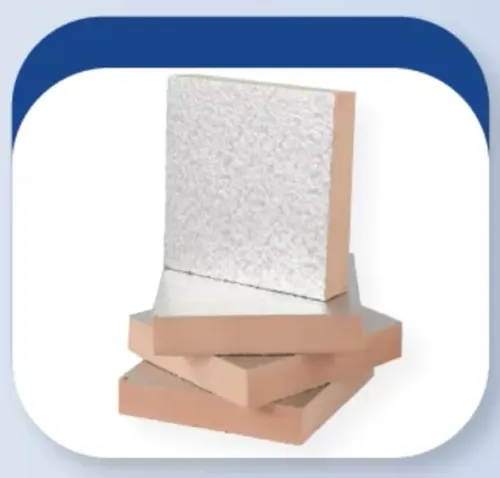
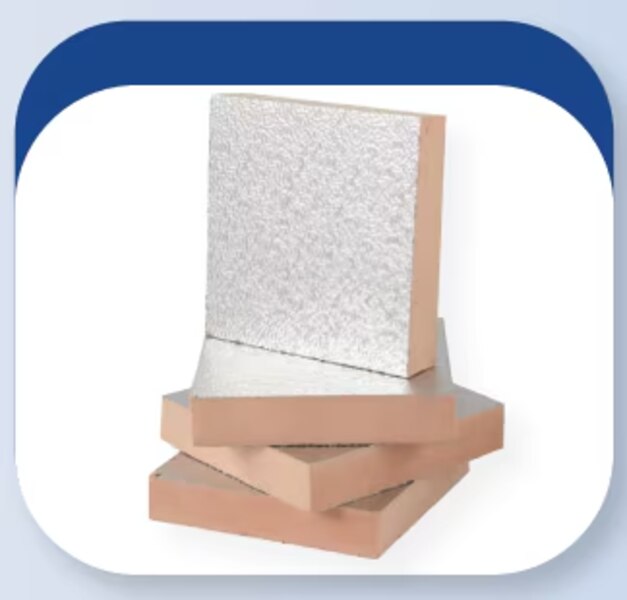
“APF board” is not a complete technical specification: different products can share the abbreviation while using different fibres, facings, densities, and fire classifications. By checking the right performance documents, installation conditions, quantity calculations, and stock details, you can decide whether a board suits your warehouse and place an unambiguous order.
Key takeaways
- Ask for the full product name, core material, thickness, density, and batch details.
- Compare declared acoustic, thermal, fire, and moisture values on the technical data sheet.
- Allow for joints, openings, cutting waste, and the warehouse build-up before ordering.
- Verify stock, delivery location, quantity, and technical documents with a Delhi supplier.
What APF Board Details Must Appear on the Technical Data Sheet?
Approve an APF board only after the technical data sheet identifies the complete product, not just the trade abbreviation. “APF” does not establish whether the core is mineral fibre, glass fibre, polyester fibre, wood fibre, or another substrate.
Confirm the core, facing, surface finish, intended service temperature, and whether the quoted configuration matches the tested configuration.
| Specification | Confirm on the data sheet | Why it matters |
|---|---|---|
| Panel size | Length, width, thickness, and dimensional tolerance | Determines layout, joints, cutting, and order quantity |
| Density and mass | Density in kg/m³ and weight per panel | Affects handling, fixing, sag risk, and performance |
| Thermal data | Conductivity in W/m·K, tested at a stated mean temperature, thickness, density, moisture condition, and method | Prevents false R-value comparisons |
| Acoustic data | Absorption coefficient or NRC, with test method such as ASTM C423 | Shows absorption; it does not prove sound-transmission loss or STC |
| Fire performance | Classification and test document, such as EN 13501-1 or ASTM E84 where applicable | Confirms the exact board and facing were assessed |
| Moisture resistance | Water absorption, moisture tolerance, and exposure limits | Indicates suitability for humid or condensation-prone areas |
| Temperature range | Minimum and maximum operating temperatures | Exposes service limits near roofs, plant, or cold rooms |
Ask an apf board details supplier for warehouses in delhi for the current data sheet, product-specific fire and acoustic reports, safety data where relevant, warranty terms, storage instructions, and batch availability. Confirm pack size, minimum order, delivery dimensions, and one consistent batch before approval.
How Should You Read APF Board’s Acoustic, Thermal, Fire, and Moisture Data?
A low NRC does not prove that a warehouse partition blocks noise, and a single R-value does not prove consistent heat control. Read each result against its test conditions, thickness, and intended assembly.
| Concern | Values to read | What the result tells you |
|---|---|---|
| Noise | ASTM C423 absorption coefficients and NRC; STC or sound-transmission loss for partitions | NRC indicates reduction of reflected noise inside a space. It does not measure sound isolation between warehouse areas, so request STC or transmission-loss data for that purpose. |
| Heat flow | Thermal conductivity, or lambda, in W/m·K; stated mean temperature, thickness, density, and moisture condition | Lower conductivity reduces heat flow. Compare R-values only when thickness and test conditions match; otherwise calculate resistance from the tested thickness and conductivity. |
| Fire | EN 13501-1 classification or ASTM E84 flame-spread and smoke-developed results; fire-resistance minutes under ASTM E119 where required | Surface classification is not a fire-resistance rating. Confirm the tested core, facing, adhesive, joints, supports, and thickness match your installation. |
| Moisture | Water absorption by volume or weight, vapour permeance, dimensional stability, and service humidity or temperature limits | These values show wetting risk, not waterproofing. A fibrous board can lose thermal performance when wet, so specify a vapour-control layer, drainage plane, or protective enclosure where the build-up needs one. |
Ask an APF acoustic board supplier in Delhi for laboratory reports, not the word “acoustic” on a catalogue page. Reject comparisons that omit the product composition or report only an unexplained “thermal value.”
Where Does APF Board Fit in a Delhi Warehouse Build-Up?
For a warehouse comparing an apf thermal insulation panel in delhi, match the board to the failure the build-up must prevent. A roof needs heat control; a partition needs sound control; a cold-storage wall needs moisture control as well as insulation.
| Area | Installation problem to solve | Where APF board fits |
|---|---|---|
| Roof build-up | Solar heat gain, thermal bridging, and condensation at joints | Install as a continuous layer within a protected roof assembly; do not treat the board alone as the vapour or weather barrier. |
| External walls | Indoor heat gain, rain exposure, and gaps around fasteners | Place it behind a weather-protective facing or drainage plane, with sealed joints and protected edges. |
| Internal partitions and ceilings | Reverberation and noise transfer between warehouse zones | Use it exposed to the sound field for absorption. A metal liner can hide its acoustic benefit, and NRC does not prove sound transmission loss. |
| Plant rooms | Equipment noise, hot surfaces, and fire exposure | Use a tested wall or ceiling assembly that names the exact facing, adhesive, thickness, joints, and supports. |
| Cold-storage areas and loading bays | Condensation, air leakage, impact, and frequent door cycling | Combine the board with continuous vapour and air control, sealed penetrations, and impact-resistant protection. |
Do not specify APF board as a universal moisture-control layer. A warehouse acoustic treatment also fails when tightly enclosed behind an impermeable finish unless that complete assembly has been tested. In office sections, use it only where the partition or ceiling design needs its particular thermal or acoustic function.
How Do You Install APF Board and Calculate the Required Quantity?
Start with a sound, dry, even substrate: masonry, concrete, metal framing, or a roof deck that can carry the board and its fixings. Remove dust, oil, loose coatings, and standing water; correct uneven areas before installation, because gaps become thermal and acoustic bypasses.
- Use the fixing pattern specified for the board and substrate. Select screws, anchors, washers, adhesive, or framing clips for the board’s weight and service temperature; extra fasteners do not compensate for unsuitable support.
- Tighten washers only until they hold the board. Over-tightening, unsupported edges, and services pressed across the surface compress fibrous insulation and reduce its designed thickness.
- Butt boards tightly, stagger joints where the build-up permits, and seal joints with the specified tape, sealant, or facing treatment. Open joints can invalidate reliance on a fire-tested assembly.
- Install the vapour-control layer as a continuous, sealed membrane in the position required by the roof or wall design. Do not treat APF board itself as the moisture-control layer; provide the specified facing, drainage plane, weather enclosure, or membrane.
- Protect corners, cut-outs, exposed edges, and loading-bay impact zones with trims or a mechanically resistant lining. Cut with a sharp insulation knife or fine-tooth saw, keeping edges square and avoiding crushed faces.
- Match the installed facing, adhesive, joint treatment, support system, and thickness to the tested fire assembly. A substitution changes the evidence.
Measure net wall, roof, or ceiling area after deducting openings, then divide by the board’s actual coverage. Order in square metres and pieces, adding 5% for simple layouts or 10% for many openings, angles, and cuts. Include full boards, not just theoretical area.
How Can You Verify Delhi Availability Before Buying APF Board?
A purchase order must identify the exact board, not merely say “APF acoustic panel.” If you plan to buy apf board in delhi, define the approved SKU or equivalent, thickness, density or grade, length, width, facing, quantity in square metres and pieces, packaging, delivery address, and unloading requirements.
1. State whether substitutions are prohibited or require written approval. A nominally similar board can differ in density, facing, fire performance, or pack size.
2. Ask the Delhi supplier to confirm available quantity by batch, manufacturing date, colour, facing, and fire-tested configuration. Require the balance quantity and delivery dates if stock is split across batches.
3. Attach the current technical data sheet and request product-specific test documents: thermal conductivity, acoustic laboratory results, fire classification, safety data where relevant, warranty conditions, and storage instructions. For acoustic claims, request an ASTM C423 report showing absorption coefficients or NRC; do not treat NRC as STC or sound-transmission loss.
4. Require the fire submittal to name the tested thickness, facing, adhesive, joint treatment, support system, and installation method. A changed facing, vapour barrier, adhesive, or open joint can invalidate the assembly result.
5. Write the inspection procedure into the order: check labels, batch numbers, dimensions, damaged corners, wet packaging, count, and documents before unloading acceptance.
Shiv Sales Corporation can help a buyer compare the quoted APF board against these fields, but the supplier’s catalogue photograph is not proof of current Delhi stock. Confirm vehicle access, pallet dimensions, minimum order quantity, replacement terms for transit damage, and dry covered storage before releasing payment.
Frequently asked questions
What details must appear on an APF board technical data sheet?
Request the complete product name, core material, thickness, density, dimensions, thermal conductivity, acoustic test data, fire classification, moisture limits, batch identification, and installation guidance. The abbreviation APF alone does not identify the board composition.
How should you compare APF board acoustic, thermal, fire, and moisture data?
Check the test method, declared unit, thickness, density, temperature range, and installation assembly behind every value. Compare like-for-like data rather than treating a single conductivity, sound, or fire figure as proof of performance in your warehouse.
Where can APF board be used in a Delhi warehouse build-up?
Assess it as part of the specified roof, wall, partition, ceiling, or equipment-enclosure assembly. Confirm compatibility with the supporting frame, vapour-control layer, waterproofing, cladding, liners, and fire strategy before approval.
How do you calculate the APF board quantity for a warehouse?
Measure the net insulated area, subtract permanent openings, divide by the board’s effective coverage, then add a cutting allowance. Include separate calculations for walls, roof zones, partitions, and areas with different thickness or installation patterns.
How can you verify APF board availability in Delhi before buying?
Ask the supplier to confirm the exact specification, available thickness and dimensions, quantity in stock, batch details, delivery location, lead time, and technical data sheet. Verify that the supplied product matches the approved submittal before dispatch.
Keywords