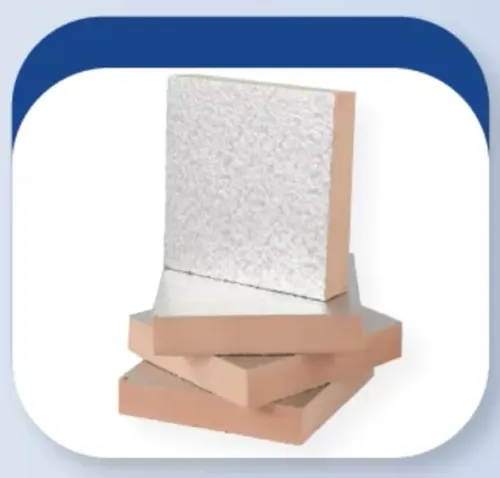
Choosing XPS by sheet price or a generic thickness can leave a roof overloaded, a basement damp, or a wall full of thermal bridges. You will be able to compare materials, calculate a project-specific thickness, specify the complete assembly, and check a Delhi quotation against installed performance.
Key takeaways
- Require XPS or extruded polystyrene on every quotation.
- Compare thermal conductivity, compressive strength, thickness, and water absorption.
- Detail joints, perimeter edges, and penetrations to prevent thermal bridges.
- Compare delivered board volume, accessories, labour, and taxes—not price per sheet alone.
What XPS Is—and How It Compares with Other Insulation Boards
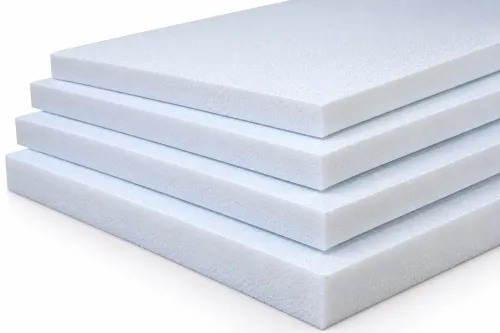
A quotation saying “polystyrene sheet” does not identify the product you are buying. Require the supplier to write XPS, or extruded polystyrene, on the quotation. XPS is made by extruding polystyrene into a relatively uniform closed-cell board; EPS is made by expanding and bonding polystyrene beads.
Their moisture behaviour, strength and declared thermal values are not interchangeable.
| Option | What it means | What to check |
|---|---|---|
| XPS | Rigid, closed-cell board with moisture tolerance and compressive performance | Declared thermal conductivity, water absorption and compressive class |
| PUR/PIR | Rigid boards that often achieve lower thermal conductivity than XPS at equal thickness | Declared service-temperature limit, ageing data, facings and fire classification |
| Mineral wool | Fibrous insulation with stronger fire and acoustic applications | Fire classification, density and tested sound performance |
| Bubble insulation | Reflective foil system that relies on an adjacent air gap | Foil reflectance, air-gap depth and installation; it is not a rigid board equivalent |
For extruded polystyrene insulation in Delhi, choose XPS where rigidity, moisture tolerance and load resistance matter. Do not call it a waterproofing membrane, acoustic absorber or fire-rated assembly: it is combustible polymer insulation, and the complete build-up determines fire performance.
PUR/PIR may offer better thermal performance, while mineral wool suits fire or acoustic priorities; each has its own temperature limits.
EN 13164 covers factory-made XPS products. Ask for product identification, the edition and test methods used, declared thermal conductivity and declared reaction-to-fire classification. Reject unsupported claims such as “fire-resistant” or “high insulation.”
The Specification Checklist: From Thermal Conductivity to Long-Term Load
Put these fields on the purchase order before requesting prices:
- Board thickness, length, width, surface finish, and edge profile
- Declared thermal conductivity at the stated thickness and ageing condition
- Compressive strength at a stated deformation level
- Compressive creep or long-term deformation data
- Water absorption test result and vapour resistance
- Reaction-to-fire classification and service-temperature limit
- Packaging, quantity, delivery condition, batch number, and test-report identification
| Figure | What it proves | What it does not prove |
|---|---|---|
| Short-term compressive strength | Resistance during a specified brief test at a stated deformation | Performance under permanent load |
| Compressive creep or long-term deformation | Thickness loss or strain during sustained loading | Immediate handling strength |
| Reaction-to-fire classification | Board behaviour in the named test configuration | Fire performance of the complete roof or wall assembly |
A short-term strength figure does not predict a permanently loaded floor, inverted roof, parking deck, or foundation. Require long-term deformation data; otherwise a board can pass the compression test and still settle under sustained load.
Calculate thickness from the assembly’s target U-value. Subtract the resistance of concrete, masonry, screed, air films, and finishes, then select XPS using its declared thermal conductivity and the resistance still required. Do not choose by brand, density, or a generic 25 mm, 50 mm, or 75 mm label.
An xps sheets supplier in delhi should provide comparable values using the same EN 13164 edition and test methods. Ask for the declaration or report, not a “high insulation” claim.
Where XPS Belongs in Delhi Roof, Wall, Floor and Foundation Assemblies
Place XPS according to the assembly, not the sheet label. The phrase extruded polystyrene insulation in Delhi does not identify a board suitable for every roof, wall, floor, foundation, or cold room.
1. In an inverted roof, install XPS above the waterproofing membrane; it does not replace that membrane. Design drainage, geotextile, gravel, pavers, screed, ballast, and permanent and temporary loads together, then protect boards before covering.
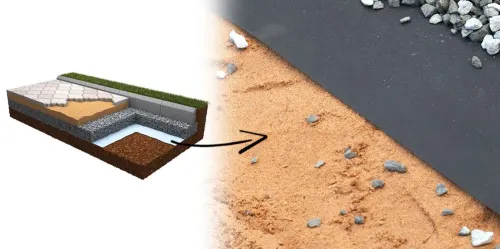
2. At basement walls and foundation edges, coordinate XPS with external waterproofing, protection board, drainage board, filter fabric, and the backfill sequence. Below-grade insulation remains moisture-resistant, not waterproof; open joints, damaged edges, penetrations, and hydrostatic pressure still create water paths.
3. Over soil and at plinths, run insulation continuously across the designed layer, isolate it from ground moisture, and protect it from construction traffic. Detail parapets, roof falls, upstands, corners, slab edges, and foundation edges; field-area coverage alone leaves thermal bridges and leakage routes.
4. In cold rooms, verify the specified low-temperature service range, continuous vapour control, sealed joints, and hygienic protective finish before installation. Delhi’s hot roof surfaces, intense sun, monsoon wetting, and winter temperature swings demand the specified thickness, closed joints, and drainage without trapped water.
Keep insulation, membranes, finishes, and load paths coordinated in the drawings. A generic thickness or density cannot resolve these interfaces.
Installation Details That Stop Water Paths and Thermal Bridges
A sound installation needs a clean, dry substrate: repair hollows, remove standing water, and reject loose or contaminated surfaces. Water entering open joints or penetrations can bypass moisture-resistant XPS and create cold paths.
1. Confirm adhesive compatibility in a written technical datasheet or small trial. Solvent-based adhesives, fuels, some paints, and some waterproofing products can soften polystyrene; never infer foam safety from general construction use.
2. Cut boards accurately, press tight butt joints together, and stagger successive rows. Fill unavoidable gaps with a compatible material, not an open channel. Use mechanical fixings only where the assembly design permits them, then seal penetrations around fasteners, pipes, drains, and services.
3. Continue insulation through parapets, upstands, columns, corners, slab edges, balcony projections, and foundation edges. A thin bead of sealant cannot correct a missing board and will leave a thermal bridge.
4. Follow the specified covering sequence. For an inverted roof, install waterproofing first, then XPS, drainage layer, geotextile, gravel, pavers, screed, or ballast as designed. For a foundation, install external waterproofing, XPS, protection or drainage board, filter fabric, and backfill in that order.
For a floor, complete the damp-proof or waterproof layer, place XPS, then install the designed slab or screed and finish.
5. Cover exposed XPS promptly with the specified screed, paver, protection board, render system, or tested finish. Keep it away from ultraviolet light, impact, hot work, and site traffic until protected.
How to Compare a Delhi Supplier’s Quotation and Installed Cost
Send every extruded polystyrene sheets supplier in Delhi the same schedule: application and assembly location, thickness, board dimensions, compressive-strength class, declared thermal conductivity, water-absorption limit, vapour resistance, fire classification, edge profile, surface finish, quantity, wastage allowance, packaging, delivery and unloading point, GST treatment, cutting requirement, and included freight.
- Ask suppliers to price the specified product, not a generic “polystyrene sheet”.
- Require each quotation to separate supply, cutting, freight, unloading, installation, waterproofing, and protection responsibilities.
Compare extruded polystyrene sheets price in Delhi by installed cost per square metre, not by sheet price alone.
| Option | Check in the quotation | Add to installed cost |
|---|---|---|
| Product | Match thickness, dimensions, conductivity, strength, water absorption, fire class and edge profile | Joint wastage and perimeter or service-penetration cuts |
| Assembly | Confirm adhesive or fixings, membrane interfaces, drainage or protection boards and covering | Compatible adhesive or fixings, screed and protection materials |
| Delivery | Confirm quantity, packaging, freight, unloading location and GST treatment | Unloading, freight and GST |
Before you buy extruded polystyrene sheets in Delhi, request the datasheet, batch details, test reports or declaration, storage instructions, and written confirmation of adhesive and covering compatibility. Check solvent-based products separately; “foam-safe” is not a sufficient specification.
A quotation from Shiv Sales Corporation is useful to evaluate when it answers these fields clearly and separates product supply from waterproofing, installation and protection.
At receipt, verify labels, dimensions, damaged edges, quantity, and that the delivered grade matches the purchase order.
Related products
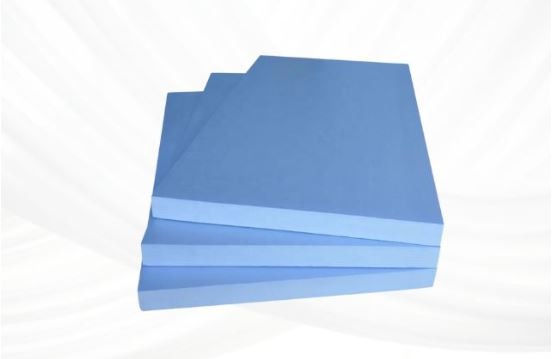 | Extruded Polystyrene Sheets Shiv Sales Corporation offers high-quality and cost-effective extruded polystyrene foam designed to meet various insulation requirements. View product → |
 | Extruded Polystyrene Sheet (XPS Board) – High-Performance Thermal Insulation Extruded Polystyrene Sheet (XPS Board) – High-Performance Thermal Insulation XPS Board from Shiv Sales Corporation is a rigid, moisture-resistant thermal insulation sheet designed for roofs, walls, floors, and foundation... View product → |
Frequently asked questions
How does XPS differ from EPS insulation boards?
XPS is extruded into a relatively uniform closed-cell board, while EPS is made by expanding and bonding polystyrene beads. Compare each board’s thermal conductivity, compressive strength, water absorption, and intended assembly.
Which XPS specifications should builders verify before ordering?
Check the declared thermal conductivity, board thickness, compressive strength at the stated deformation, water absorption, dimensions, edge profile, surface finish, and long-term load performance. Ask for the technical datasheet and batch identification.
Where can XPS be used in Delhi building assemblies?
Use XPS where its moisture resistance and compressive strength suit the design, including selected roof, wall, floor, and foundation applications. Confirm compatibility with waterproofing layers, adhesives, membranes, finishes, and fire-safety requirements.
What should a Delhi XPS quotation include?
Require the product name, thickness, dimensions, quantity or cubic volume, thermal and structural specifications, delivery location, taxes, freight, lead time, accessories, and installation scope. Compare the complete installed cost rather than the price per sheet.
Keywords