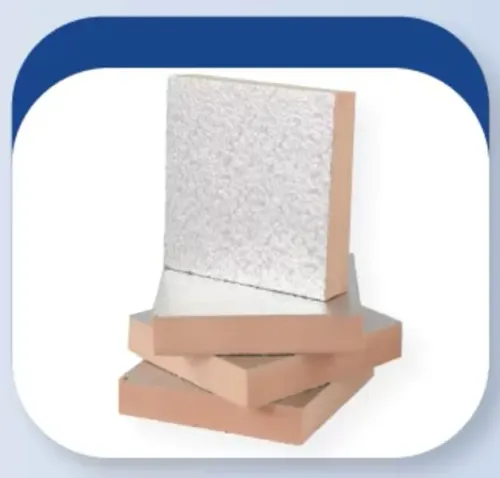
Rigid insulation boards are useful in construction applications where a defined shape, moisture resistance, and compressive strength are important. Extruded Polystyrene (XPS) board insulation is one such option and can be considered for specific building envelope and flooring applications.
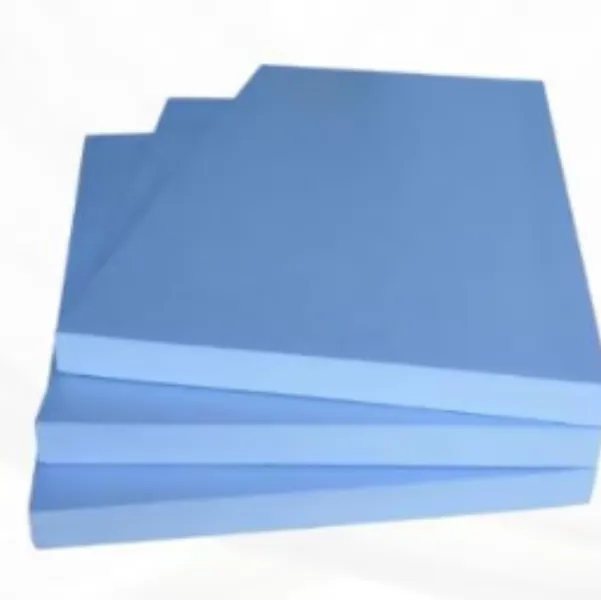
Unlike flexible fibrous insulation, XPS is supplied as a rigid board. This difference makes it particularly relevant where the insulation must maintain its shape under particular service conditions.
What Is XPS Insulation?
XPS is a closed-cell rigid foam insulation material manufactured through an extrusion process.
Its closed-cell structure gives it characteristics that can be useful in applications where moisture exposure and compressive strength are concerns.
Depending on the product specification, XPS can be used in areas such as:
- Floors
- Foundations
- Basements
- External insulation systems
- Roof assemblies
- Areas exposed to moisture
- Thermal bridge reduction applications
The exact application should match the manufacturer's technical specifications and project requirements.
Why Rigid Boards Are Different
Fibrous materials such as glasswool and rockwool are flexible or semi-rigid depending on their format. XPS boards provide a defined rigid shape.
This can be advantageous where the insulation must maintain dimensional stability.
The board format can also simplify installation across regular surfaces, provided the substrate is properly prepared.
Moisture Considerations
Moisture can affect the performance and durability of certain insulation systems.
XPS's closed-cell structure gives it relatively low water absorption compared with some other insulation materials. This can make it useful in selected moisture-exposed construction applications.
However, water resistance does not mean that the complete building assembly can ignore drainage, waterproofing, joints, or moisture management.
Where XPS May Be Suitable
XPS can be considered where a project requires:
- Rigid insulation boards
- Low water absorption characteristics
- Compressive strength
- Consistent board thickness
- Thermal insulation for selected building assemblies
It may not be the right choice for every roof, wall, or industrial system.
For example, a high-temperature furnace requires a completely different insulation category, while a large metal shed may be better suited to glasswool or reflective insulation depending on the roof design.
Factors to Check Before Buying
Architects, contractors, and builders should compare:
- Board thickness
- Thermal conductivity
- Compressive strength
- Water absorption
- Dimensional stability
- Installation method
- Surface compatibility
- Environmental exposure
- Fire-related requirements
Project specifications should determine the final selection.
XPS in Delhi Construction
Delhi's construction market includes residential developments, commercial buildings, warehouses, institutional projects, and infrastructure-related work.
Different parts of these buildings may require different insulation materials. XPS can be relevant where rigid, moisture-resistant insulation is required, while glasswool or rockwool may be more appropriate for other applications.
Shiv Sales Corporation supplies insulation materials for construction and industrial requirements, enabling buyers to evaluate different product categories according to the specific application.
XPS board insulation is most effective when used in the right building assembly. Its rigid structure, closed-cell characteristics, and compressive strength can provide advantages in suitable applications, but successful performance depends on correct specification, installation, and moisture management.
Keywords