The right container size depends on polymer consumption, not on the repair area alone. By the end, you will be able to convert the repair method, cement demand, coats, wastage, and Delhi site conditions into a pack quantity you can verify against the product’s technical data sheet.
Key takeaways
- Use manufacturer dosage, not surface area alone, to calculate polymer quantity.
- Choose the pack after identifying slurry, repair mortar, screed, or coating use.
- Add measured allowance for spillage, residue, and Delhi site conditions.
- Verify batch number, seal, technical data sheet, and mixing instructions before purchase.
What “URP polymer size” actually means on a repair site
“URP polymer size” normally means the container quantity, not application thickness, polymer grade, or repair performance. Pack size is a commercial format; the required polymer quantity comes from the manufacturer’s dosage for a bonding slurry, polymer-modified repair mortar, screed additive, or waterproofing coat.
Before comparing URP polymer options for repairs, obtain the current product label and technical data sheet. Check:
- Polymer chemistry and recommended cement grade.
- Dosage for the intended bonding slurry, mortar, screed, or coat.
- Required substrate condition, curing method, and application thickness.
- Compatibility with concrete, masonry, plaster, and cement screeds.
- Whether the stated ratio uses cement mass, total mortar mass, or liquid volume.
Words such as universal, bonding, or repair do not make products interchangeable. A bonding slurry is applied thinly and covered while tacky or within the stated window; a repair mortar is mixed, placed, and compacted to its specified thickness. Let the slurry dry fully and the interface can weaken.
Use this URP polymer selection guide rule: calculate cement or mortar demand first, apply the specified polymer dosage, then choose the next available pack with a controlled reserve. A larger container is not a performance grade. Adding extra polymer will not correct the wrong cement ratio, excess water, poor substrate preparation, or incorrect curing.
Size the purchase from dosed quantity, not square metres alone.
How to calculate the pack from area, thickness, and mix demand
Measure the repair before choosing a universal repair bonding polymer size. Polymer demand follows the mix design and number of coats, not square-metre area alone.
1. Measure each patch’s length, width, and average depth in metres. Calculate volume as length × width × depth, then total all patches.
2. Convert that volume into the specified cement-and-sand mortar quantity. Use the manufacturer’s technical data sheet for the cement:sand ratio, polymer dosage, and water limit; do not treat polymer as a direct replacement for water.
3. Count the applications: one thin bonding coat, one repair-mortar layer, repeat coats, edge priming, or a waterproof coating. Keep bonding-coat consumption separate from mortar thickness.
4. Apply the stated polymer rate to each application and add measured allowances for bucket residue, spillage, absorbent or uneven substrates, edge priming, trial batches, and extra coats. Never reduce cement or add water to stretch a batch; the repair can become porous, shrink, and debond.
5.
Use the calculation differently for each job: a small isolated concrete patch needs patch volume plus bonding slurry; several rooms of plaster repair need the combined mortar demand; a screed section needs its full thickness; crack filling depends on crack length, width, and depth; a thin waterproof coating depends on coated area and coat count.
6. Round the total polymer requirement up to the next available pack. Choose a small pack for a trial or isolated repair, a mid-size pack for repeated local work, and bulk only when planned work will consume it within the stated shelf life.
Match the polymer quantity to the repair method, not just the surface
A balcony patch, bathroom coating, basement leak, façade repair, and industrial floor need different polymer quantities because the method changes the mix, thickness, coats, and wastage—not merely the surface area.
| Method | Material demand | Execution and reserve |
|---|---|---|
| Small patch repair | Bonding slurry plus repair mortar; reserve for edges and uneven depth | Remove loose concrete, roughen sound concrete, place mortar over the tacky slurry, and allow measured waste |
| Plaster repair | Repeated thin coats over a larger area | Remove dust, paint, and salts; budget for absorbent masonry and trial batches |
| Screed repair | Polymer dosage follows cement and screed thickness | Compact the specified depth; reserve for joints, edges, and surface variation |
| Crack filling | Depends on crack width, depth, and movement | Clean the crack; do not use rigid filler for moving or settlement cracks |
| Exposed reinforcement repair | Extra preparation and repair-mortar volume | Remove corrosion products, assess the steel and cause, then use the specified repair system |
| Waterproof coating | Thin coats, often repeated across the full area | Prepare a clean, sound substrate and reserve for the stated number of coats |
Remove laitance, dust, oil, paint, salts, loose concrete, and corrosion products. Roughen sound material, then dampen it to saturated-surface-dry condition: internally moist, with no standing water.
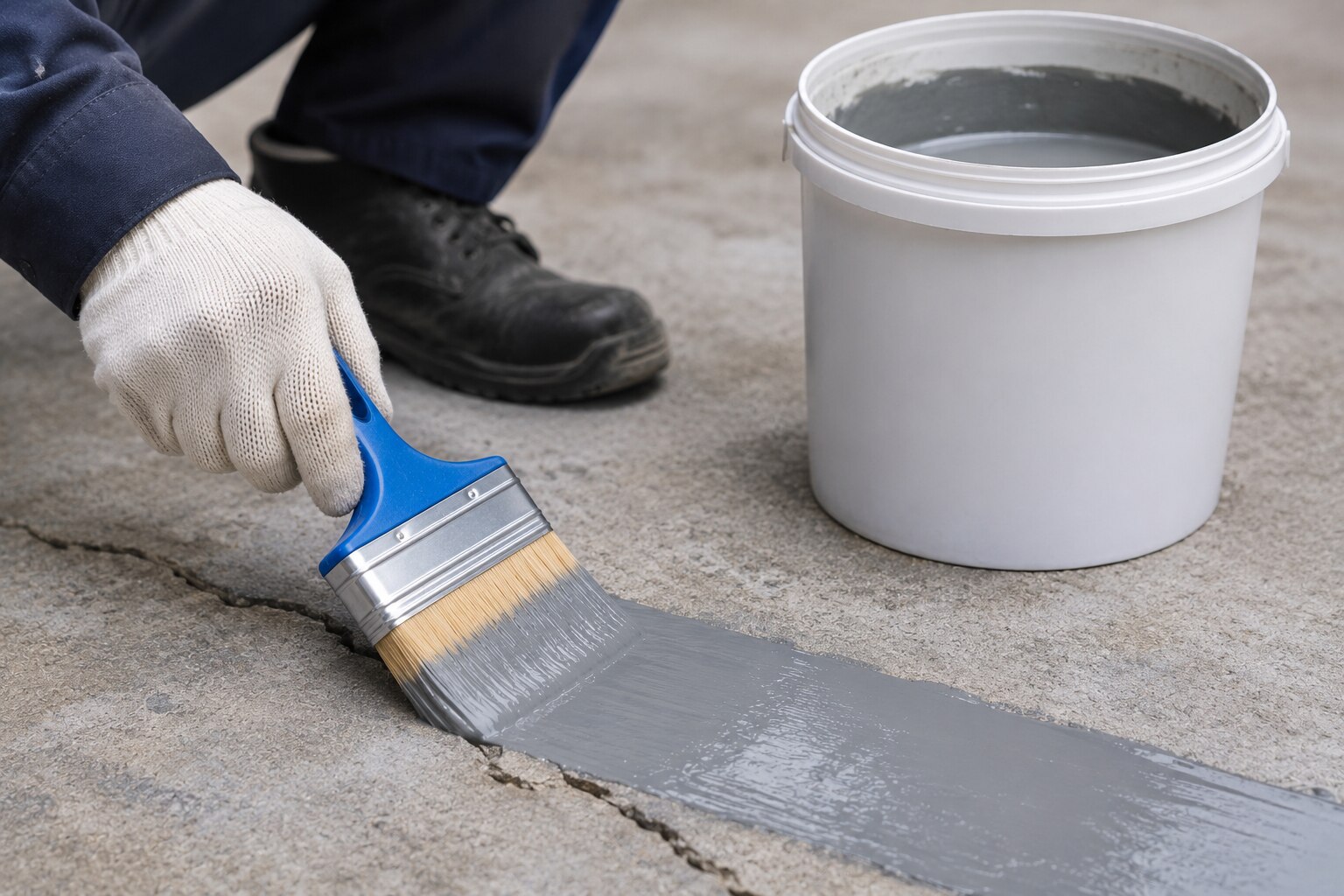
Apply the bonding slurry evenly and place the repair mortar while it remains tacky or within the stated window. Compact the mortar to its specified thickness and cure it as directed; letting the slurry dry fully can create debonding.
Deep spalls, active water ingress, hydrostatic pressure, moving cracks, settlement cracks, and vehicle loading need cause assessment and separate details. Increasing dosage does not stop flowing leaks, movement joints, or structural deterioration. Compare URP polymer options for repairs by dosage and method, then add a controlled reserve for residue, spillage, and repeat coats.
Adjust the quantity for Delhi heat, winter work, and material loss
A theoretical dosage is only the starting quantity. For a URP polymer size for repair jobs in Delhi, add site losses after calculating the specified polymer demand for the bonding coat, repair mortar, or waterproofing coat. Delhi’s hot, dry summer air can pull water from an opened dispersion, mixed mortar, and bonding slurry quickly.
- Make a measured trial batch and record its actual consumption.
- Add allowance for uneven or highly absorbent substrates.
- Include extra bonding slurry along repair edges and around exposed reinforcement.
- Allow for residue left in buckets, spillage, and one controlled reserve for a repeat coat.
- Keep opened containers shaded, sealed, and away from direct sun; do not leave mixed material exposed on the slab.
- For winter work, follow the label’s minimum application temperature, storage temperature, and curing instructions instead of assuming year-round performance.
Do not round up before applying the stated dosage and realistic wastage allowance. A large container can cost more when a small repair leaves it exposed to contamination, skin formation, evaporation, or freezing after opening.
Buy that size only if the remaining polymer can be used within its stated shelf life and stored under the specified conditions.
Record the final quantity as polymer needed plus measured loss and reserve, then select the next available pack. If the label limits application temperature, pot life, or curing conditions, those limits control the purchase decision as much as the calculated volume.
What contractors should verify before buying a URP pack
Reject the pack if its label or technical data sheet cannot confirm the dosage and use conditions. For a URP polymer size for repair jobs in Delhi, verify:
- Net quantity, batch number, manufacture date, expiry date or recommended use period, and an intact seal.
- Storage instructions, including temperature limits and protection from direct sun, contamination, evaporation, or freezing.
- Exact cement-to-sand-to-polymer-to-water ratio, workable consistency, pot life, application thickness, and curing method.
- Compatibility with the intended concrete, masonry, plaster, or screed substrate and with the expected exposure, such as rain, immersion, heat, or vehicle loading.
| Pack choice | Use it when | Main check |
|---|---|---|
| Small pack | Trial area or isolated patch | Calculated dosage plus measured wastage fits before expiry |
| Mid-size pack | Several rooms or repeated local repairs | Planned batches fit the pot life and usable period |
| Bulk pack | Scheduled contractor work | The sealed and opened material can be consumed safely within its stated period |
Shiv Sales Corporation, a Delhi-based manufacturer, importer, and distributor, can help business buyers check the current local label and available container formats; verify the technical data rather than assuming the largest pack is best.
Record the batch number and exact mix ratio on each job sheet. Never combine similar repair polymers without compatibility confirmation. For URP bonding polymer for contractors, buy the smallest pack covering the calculated, dosed, and reasonably wasted quantity; choose larger only when planned work will consume it safely within its usable period.
Related product
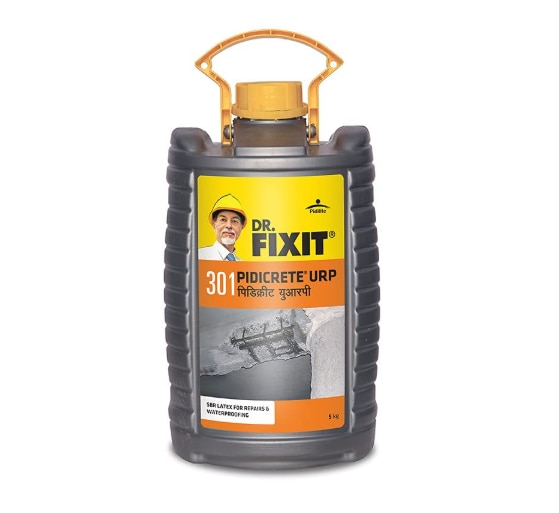 | URP – Universal Repair & Bonding Polymer URP – Universal Repair & Bonding Polymer URP from Shiv Sales Corporation is a high-performance bonding agent and waterproofing polymer used to enhance the strength, adhesion, and flexibility... View product → |
Frequently asked questions
What does URP polymer size mean on a repair site?
URP polymer size normally means the container quantity. It does not describe application thickness, polymer grade, or repair performance.
How do you calculate the URP polymer quantity for a repair?
Calculate the repair volume from area and thickness, identify the dry-mix or cement quantity, then apply the manufacturer’s polymer dosage and add a measured allowance for material loss.
Should you choose URP polymer size from the surface area alone?
No. Match the quantity to the repair method, such as bonding slurry, polymer-modified mortar, screed additive, or waterproofing coat, because each method has a different mix demand.
What should Delhi contractors check before buying a URP polymer pack?
Check the pack seal, batch number, manufacturing and expiry information, technical data sheet, dosage, storage instructions, compatibility, and the pack quantity against the calculated requirement.
Keywords