A ceramic module belongs around high-temperature equipment, not automatically across every metal shed roof or wall. By checking measured surface temperatures, continuous-use conditions, thermal conductivity, weather exposure and installation details, you can decide when ceramic insulation is justified and when mineral wool, PIR, glass wool or a reflective system is the better specification.
Key takeaways
- Use ceramic modules near measured heat sources, not across an ordinary metal roof.
- Specify module thickness, density and temperature rating against actual service conditions.
- Protect ceramic fibre from moisture, impact, abrasion and direct weather exposure.
- Separate hot-face lining work from standard roof and wall insulation installation.
Start with the shed’s heat source, not the roof material
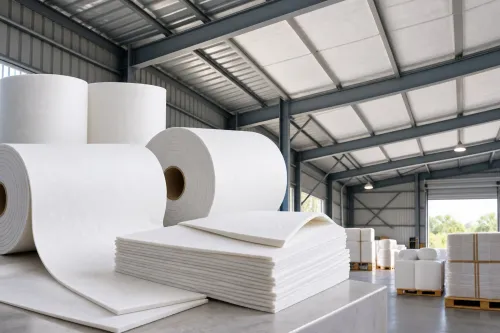
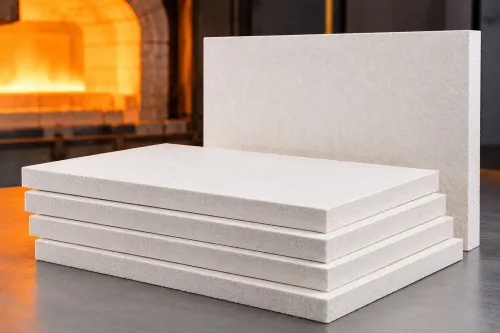
A ceramic module for shed insulation contractors is justified by the heat source, not by a metal roof. Use it locally around furnaces, ovens, kilns, boilers, flues, hot ducts, radiant-heated equipment, or a hot-face lining where measured temperatures exceed the practical service range of ordinary building insulation.
For an unheated storage shed, workshop, agricultural store, or general warehouse, specify the building envelope instead. Ceramic module shed use is usually excessive there: it costs more, does not deliver the best acoustic absorption per installed thickness, and does not automatically provide a fire-resistance rating.
Check these conditions before proposing it:
- Measure the hottest casing, duct, or wall surface during operation, then compare that temperature with the insulation’s continuous-use limit and conductivity at its stated mean temperature.
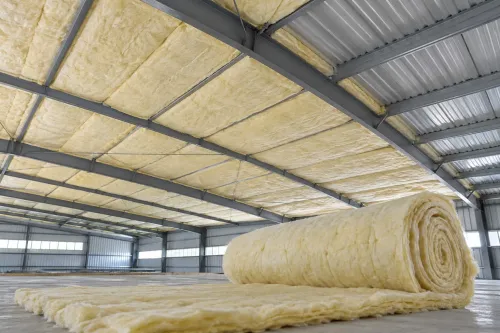
- Use ceramic only where high-temperature exposure is local or continuous; use mineral wool, stone wool, glass wool, PIR/PUR, EPS, calcium silicate, or an insulated sandwich panel for cooler roof and wall areas.
- Treat acoustic control separately. The roof, cavity, liner, joints, and penetrations determine sound performance, not the ceramic fibre’s refractory rating.
- Do not infer a tested fire rating from a non-combustible fibre; the complete assembly requires classification.
| Option | Suitable shed condition | Main reason |
|---|---|---|
| Ceramic module | Furnace, kiln, boiler, hot duct | High-temperature hot-face duty |
| Mineral or stone wool | Warm envelope and acoustic walls | Fire, sound, and general insulation |
| PIR/PUR or sandwich panel | Ordinary roof and wall envelope | Lower heat loss with practical installation |
| Reflective foil | Radiant control with an air gap | Not a substitute for bulk insulation |
Specify the ceramic module by service conditions
Select the module from the hottest measured surface and the required service life, not from a nominal thickness. Ceramic insulation for contractors must be rated for the design temperature, atmosphere, heat-up cycles and attachment temperature; a 1,260°C, 1,430°C or 1,600°C maximum continuous-use grade is not itself a safe operating temperature.
| Item | Obtain from the supplier | Why it changes selection |
|---|---|---|
| Service temperature | Continuous and peak temperatures, measured at the hot face and casing | Exceeding the design temperature causes shrinkage, heat loss and anchor failure |
| Density and thickness | Dry density in kg/m³ and compressed thickness in mm | These set thermal resistance, weight, compression and heat storage |
| Fibre specification | Fibre chemistry, classification, shot content and safety data sheet | Fibre type affects shrinkage, handling controls and atmosphere resistance |
| Conductivity | Thermal conductivity in W/m·K at stated mean temperatures, such as 200°C, 400°C, 600°C and 1,000°C | Conductivity rises with temperature; a room-temperature value understates heat loss |
| Heat storage | Specific heat capacity in kJ/kg·K and, preferably, volumetric heat capacity in kJ/m³·K | Higher heat storage slows temperature changes but increases warm-up energy |
For ceramic module applications, obtain the manufacturer’s shrinkage after the specified time and temperature, plus thermal expansion and thermal-cycling data. Ask whether the quoted figures apply to the folded module or loose blanket.
A module for a furnace casing or hot duct is not automatically a roof insulation system: you still need a protected outer skin, weather control and tested assembly details.
Compare ceramic fibre with roof and wall insulation systems
Ceramic fibre is worth its higher-temperature capability only where the measured hot face exceeds the practical service range of the alternative. For an ordinary metal-roofed storage shed, stone wool, mineral wool, glass wool, PIR panels or a purpose-designed sandwich panel usually deliver the required U-value at lower installed cost.
Ceramic insulation for contractors becomes credible around furnaces, ovens, kilns, boilers, flues and hot ducts—not across a cool building envelope.
| Option | Main advantage | Limitation and suitable use |
|---|---|---|
| Ceramic fibre module | High hot-face temperature capability and low heat storage | Mechanically weak; use as a supported, protected lining |
| Stone or mineral wool | Fire resistance, acoustic control and rigid-board options | Bulkier; use for ordinary roof and wall envelopes |
| Glass wool | Low-cost thermal and acoustic infill | Lower temperature tolerance; keep it away from hot equipment |
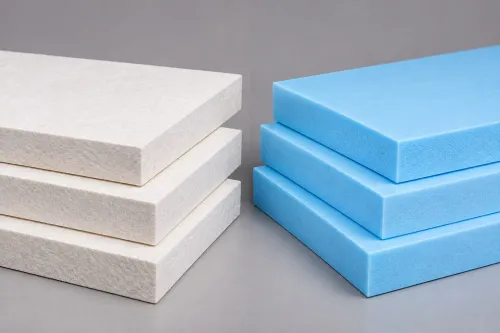
| PIR panel | Low thickness and strong U-value | Check fire classification, joints and temperature limits |
| Reflective foil system | Reduces radiant transfer across a clean air gap | Not a standalone substitute for bulk insulation |
Compare the options using thermal conductivity at the stated mean temperature, target U-value, fire classification, condensation risk, acoustic requirement, mechanical exposure, access, replacement interval and total installed cost. Do not compare a ceramic catalogue thickness with a room-temperature PIR value.
For industrial shed heat insulation, calculate the outer-surface temperature and heat loss under the actual duty cycle. Include anchors, weather skin, flashings, vapour control, penetrations and maintenance access in the ceramic price. If water, wind, vibration or impact can reach the module, the cheaper building-envelope system usually remains the defensible choice.
Install the module as a protected hot-face system
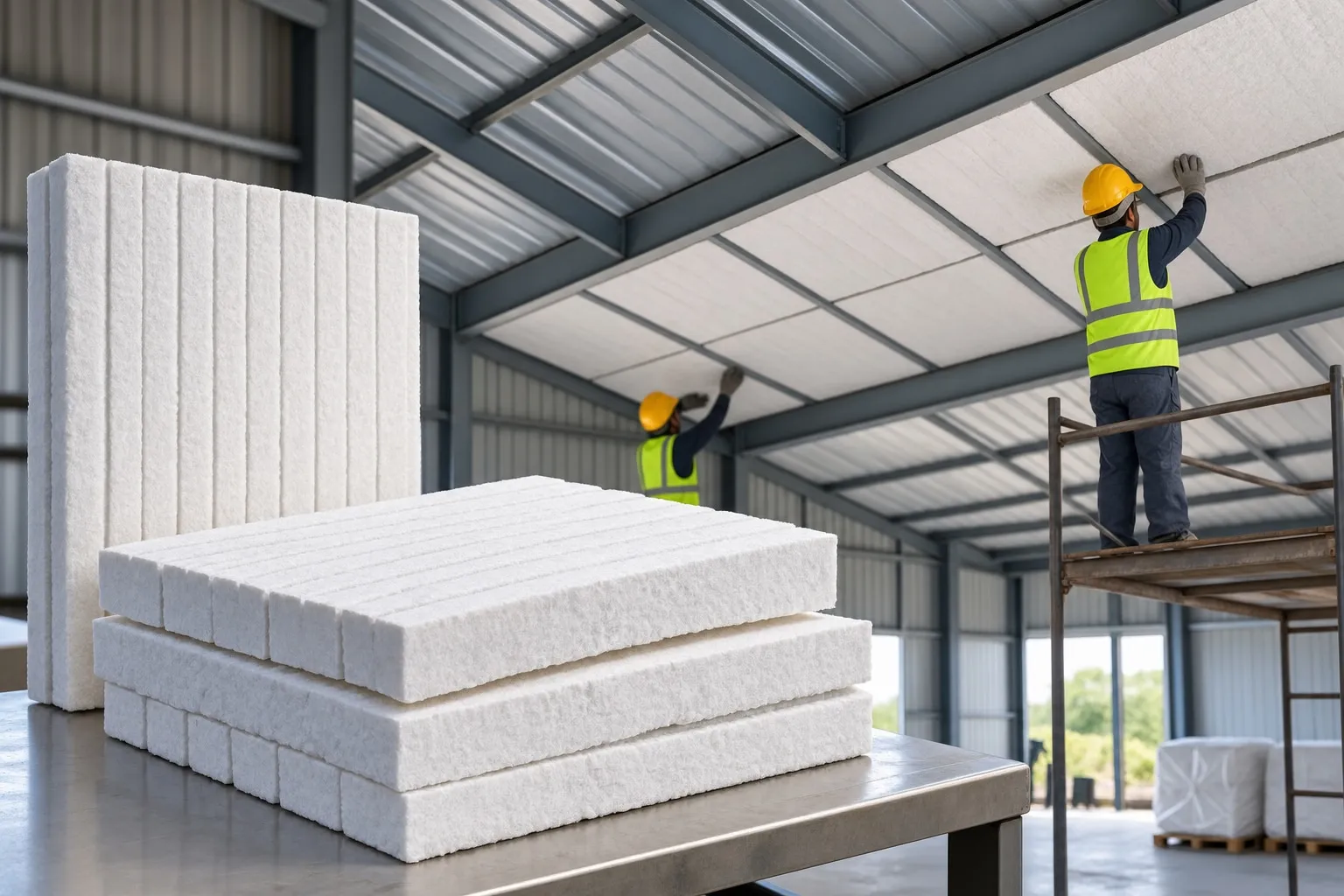
A ceramic module fails quickly when it is fastened to thin roof sheeting or left exposed to rain, wind and impact. Anchor it to a designed steel casing, liner frame or independent support using metallic anchors rated for the measured service temperature.
Follow the manufacturer’s specified module compression; over-compression changes thickness and density, while under-compression opens hot gas paths.
Detail each interface as a separate ceramic module application:
- Roof sheets and walls: keep the module behind a continuous protective liner or casing; do not rely on profiled sheet metal to hold it.
- Purlins: bridge the steel member with a supported, insulated detail so thermal movement does not crush the module or create a cold stripe.
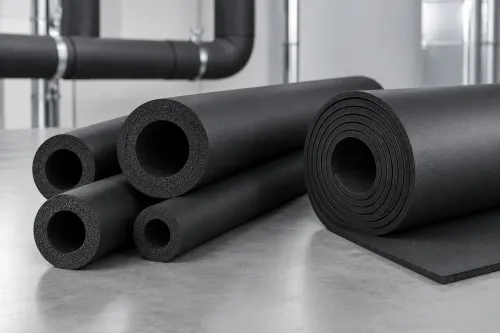
- Ducts and penetrations: use close-fitting collars, sealed joints and movement allowance specified for the duct temperature; never pack a rigid joint against a moving hot pipe.
- Doors: use a replaceable compressed seal at the leaf and frame, with no exposed fibre at the closing edge.
- Skylights: terminate the hot-face lining before the glazing system and protect the transition from radiant heat and impact.
- Ridge details: continue the weather skin, flashing and drainage path across the ridge without pinching the module.
- Joints: butt and stagger module joints, secure every edge, and eliminate straight-through gaps at corners.
- Protection: install a metal liner, refractory coating or other tested erosion barrier where flame, gas flow or handling can reach the fibre.
For ceramic module shed use, seal the outer assembly against rain and humidity while preserving the required hot-face arrangement. During cutting and fitting, control dust with local extraction, respiratory protection and cleanup that avoids sweeping or compressed air.
Make the specification safe, weatherproof and commercially defensible
An exposed ceramic module is not a weatherproof shed system. Specify the outer skin, flashings, drainage, vapour or air-control layer, structural anchors and sealed joints, or rain and humidity will degrade the lining and expose fibres.
Use this tender checklist before offering industrial shed heat insulation:
- State rain, humidity, oil, dust and chemical exposure limits, plus the protective facing or cladding.
- Design for wind suction, vibration, impact, thermal cycling and movement at joints; identify replacement access.
- Require controlled cutting, dust extraction, protective clothing, respiratory protection, sealed surfaces and a demolition procedure for respirable ceramic fibre.
- Name the tested fire classification for the complete assembly, including steelwork, fixings, penetrations, joints and linings. Do not convert a fibre temperature limit into a fire-resistance rating.
- Obtain a signed datasheet showing continuous-use temperature, density, thickness, fibre classification, and thermal conductivity at stated mean temperatures.
- Demand batch traceability, safety data sheet, installation instructions, dimensional tolerances, test reports and warranty exclusions. Shiv Sales Corporation can be asked to attach these documents to its quotation rather than provide a product name alone.
| Option | Commercially defensible use | Main warning |
|---|---|---|
| Ceramic module | Local hot faces, furnaces, kilns, boilers and hot ducts | Higher installed cost; needs weather and impact protection |
| Mineral or stone wool | Ordinary shed envelope and moderate-temperature areas | Confirm fire, condensation and compression performance |
| PIR, EPS or foil system | Dry, non-hot envelope zones | Reject near temperatures beyond its tested service range |
Reject the ceramic-module option if the supplier cannot prove the assembly performance and exposure controls.
Frequently asked questions
When is a ceramic module suitable for shed insulation?
Use it locally around furnaces, ovens, kilns, boilers, flues, hot ducts and radiant-heated equipment when measured temperatures exceed ordinary building insulation’s practical range.
How should contractors specify a ceramic module for shed use?
Specify the service temperature, continuous operating temperature, module thickness, density, heat source, attachment method and required hot-face protection.
How does ceramic fibre compare with roof and wall insulation?
Ceramic fibre handles concentrated high-temperature zones, while roof and wall systems provide broader thermal control and weather protection at lower service temperatures.
How should a ceramic module be installed safely?
Install it as a protected hot-face system, prevent exposure to moisture and impact, seal joints where required, and follow the manufacturer’s handling and fixing instructions.
Keywords