

A hot industrial shed can have several different heat problems: solar gain through the roof, radiant heat from equipment, hot exhaust zones, and unsafe partitions near furnaces. You will be able to identify which surfaces need ceramic fiber board, calculate the required specification, compare other insulation systems, and avoid installation failures that leave steelwork or people exposed.
Key takeaways
- Measure surface and air temperatures before selecting the board.
- Match thickness and density to heat exposure, impact and mounting space.
- Use ceramic board with a protected assembly, not as an exposed finish.
- Specify batch, grade, dimensions and test documents before buying in Delhi.
Identify the Shed Heat Problem Before Choosing a Board
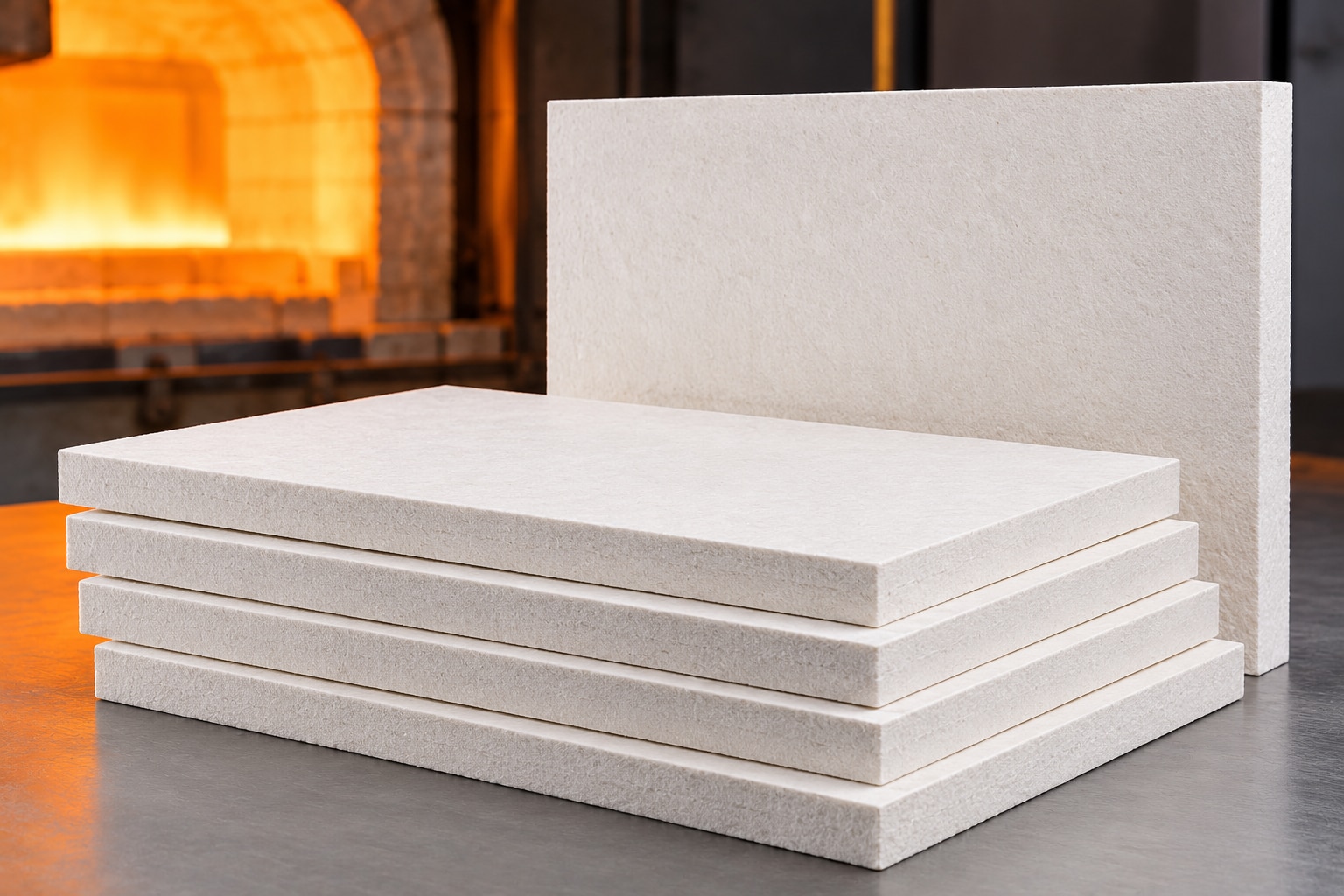
Rigid ceramic board shed insulation solves heat moving by conduction through a hot roof, wall, partition, or equipment casing. It is most useful where a measured hot surface needs a stable barrier, such as a furnace-adjacent partition, oven enclosure, duct casing, exhaust surround, or service area beside radiant equipment.
| Shed area | What the board can solve | What it cannot solve alone |
|---|---|---|
| Furnace or oven enclosure | Reduces heat conducted through the casing and limits heat reaching nearby workers or materials | Direct flame, severe abrasion, and unsupported exposed joints |
| Hot duct, flue, or exhaust surround | Adds a high-temperature insulating layer around local hot spots | Leakage of hot gases or inadequate mechanical support |
| Roof or wall near radiant equipment | Reduces heat transfer from a locally heated sheet or lining | Radiant heat striking the room from the source |
| Ordinary Delhi shed roof | Limits conduction through a suitably protected assembly | Solar radiation, roof glare, and hot air entering through openings |
Measure the actual hot-face temperature, exposure duration, airflow, and water contact before choosing high temperature shed insulation in Delhi. A sun-heated roof is not the same problem as a furnace wall. Add a reflective outer surface, ventilated cavity, shading, or cool-roof finish when solar gain dominates.
Rigid ceramic board is not automatically an acoustic solution: a thin, hard liner with metal bridges can leave shed noise nearly unchanged.
Choose Thickness, Density and Temperature Grade From Measured Conditions
Choose thickness from heat flow at operating temperature, density from mechanical and thermal needs, and temperature grade from continuous exposure—not the largest number on the label.
| Temperature figure | What it means | How to use it |
|---|---|---|
| Classification temperature | A laboratory grade, often 1,260°C, 1,425°C or 1,600°C | Compare materials; do not treat it as a safe operating limit |
| Continuous service temperature | The supplier’s supported long-duration exposure for a stated atmosphere and installation | Use this for normal shed operation |
| Short-term peak temperature | A brief excursion above normal service conditions | Check duration, shrinkage and recovery before accepting it |
Measure the hot-face temperature, exposure duration, atmosphere, and required cold-face temperature. Then request thermal-conductivity values at the board’s actual mean temperature and density; a room-temperature value can seriously understate heat flow. Include joints, compression, orientation, aging and steel fasteners in the calculation.
Select thickness by the permissible interior-side temperature, not by habit. Increase density where the board faces handling, vibration or compression, but do not assume higher density automatically gives better insulation.
- Choose the temperature grade above the verified continuous hot-face condition, with allowance for shrinkage and the installation atmosphere.
- Choose thickness from calculated heat loss and cold-face target.
- Reject a specification that provides no conductivity-versus-temperature data, shrinkage result or load condition.
An industrial shed heat insulation board also cannot block roof radiation by itself. Add a reflective outer surface, ventilated cavity or shading where radiant heat remains the problem.
Match Ceramic Fiber Board With the Right Alternative for Each Zone
Ceramic-fiber board is the stronger choice beside furnaces, flues and radiant process equipment when low thermal mass and high-temperature capability matter more than impact resistance. It is the weaker choice for a conventional Delhi shed envelope, where weather protection, sound control and mechanical durability usually matter more than furnace-grade performance.
| Option | Ceramic-fiber board is better when | Alternative is better when |
|---|---|---|
| Mineral wool | The zone has intense radiant or process heat beyond ordinary envelope duty | You need a tested roof or wall assembly with stronger impact, acoustic and weather performance |
| Rock wool | You need a lightweight refractory lining near hot equipment | The insulation sits inside a vibrating, occupied or traffic-exposed building envelope |
| Calcium silicate | Low heat storage and rapid heat-up matter | The lining needs greater compressive strength, dimensional stability or routine handling |
| Refractory brick | Weight, abrasion resistance and direct flame contact are unavoidable | You need thinner, lighter insulation around equipment |
| Blanket | A curved surface or irregular penetration prevents rigid-board fitting | The surface needs firm, walkable or mechanically stable support |
| Sandwich panels | You are insulating the complete roof or wall against weather and noise | A hot face exceeds the panel core, facing or joint system’s tested limit |
| Reflective coating | The problem is solar radiation across a sound, air-spaced surface | You need conduction control, fire resistance or insulation around a hot process source |
Compare the tested complete assembly, not the highest temperature printed on one board. Protect exposed ceramic fiber from airflow, abrasion and water with a suitable facing or refractory treatment.
Build a Protected Shed Insulation Assembly, Not a Board-Only Fix
A rigid ceramic fiber board for high temperature shed problems in Delhi needs a complete enclosure, not direct exposure as the shed’s only heat control. Arrange the layers so the outer sheet manages weather and solar load while the board handles conducted heat from the hot zone.
- Use a light-coloured, reflective metal outer sheet as the weather skin. Add roof shading or a cool-roof finish where solar radiation dominates.
- Leave a continuous ventilated air gap behind the outer sheet, with screened low and high openings. Do not let rain enter the cavity.
- Place the ceramic-fiber board on structural rails or channels on the protected side of the cavity. Keep its thickness uniform and avoid compression.
- Install non-combustible retainers, washers and rails sized for the board’s weight and service temperature. Do not rely on adhesive alone.
- Butt joints tightly, stagger joints between layers, and cover unavoidable gaps with compatible ceramic-fiber strips. Seal penetrations around ducts, cables and supports.
- Put a radiant barrier facing the air gap when radiant roof heat is significant; put a moisture barrier on the cool side, never where it will face furnace-level heat.
- Finish the hot face with a rated refractory coating, ceramic cloth, calcium-silicate facing or metal liner. Ordinary paint and plastic film will burn, soften or peel.
For airflow, abrasion or water spray, the protective lining is essential. Without it, exposed fibers erode and gaps become direct heat paths. A hard liner also needs isolated fixings, or mechanical bridges will transfer heat through the assembly.
Prevent Ceramic Panel Installation Problems During Cutting and Service
An open joint, unsealed penetration or exposed steel fastener creates a thermal bypass that can defeat a thick ceramic fiber panel. Cut boards with sharp tools, fit edges closely, stagger joints, and seal penetrations according to the assembly design.
Prevent these ceramic fiber panel installation problems:
- Do not walk on boards or bend them tightly around corners; their brittle structure has limited impact and vibration resistance.
- Do not leave panels unsupported between widely spaced fixings, or crush them under cladding and retainers.
- Keep roof leaks and condensation out. Wetting raises heat flow and weight, damages facings, and can move joints as the board dries.
- Do not assume a hard, thin liner will control shed noise; mechanically bridged panels need sealed joints, decoupling, cavity absorption, adequate mass and controlled openings.
- Check airflow paths around edges, fasteners and service openings. Air movement can carry heat around the insulation.
Treat cutting, drilling and removal as dusty work. Provide local exhaust or suitable ventilation, prohibit dry sweeping and compressed-air blowdown, and require eye and skin protection. Complete a task-specific respiratory-protection assessment before work begins. A classification temperature such as 1,260°C does not override shrinkage, atmosphere, loading or the required cold-face temperature.
Turn the Design Into a Verifiable Delhi Purchase Specification
Before approving a Delhi shed order, make the supplier put the design values and traceable evidence on the quotation, not just “high-temperature board.”
- State hot-face temperature, exposure duration, heat source, indoor target, thickness, density, dimensions and joint layout.
- Request classification temperature, continuous service limit and short-term peak limit separately; never use the largest number as the operating limit.
- Obtain thermal-conductivity values at declared mean temperatures, dimensional tolerances, batch number, certificate of analysis and delivery moisture condition.
- Request the product data sheet, safety data sheet, fibre composition and cutting controls; require local exhaust, no dry sweeping or compressed-air blowdown, eye and skin protection, and a task-specific respiratory assessment.
- Confirm retainers, fastener isolation, sealed staggered joints, penetration treatment, outer reflective or cool-roof finish, and ventilated cavity with the installer.
- Ask Shiv Sales Corporation to identify the exact board grade and batch against these values, then inspect labels and dimensions before installation.
Reject an order with only a maximum temperature, unspecified chemistry, or no batch traceability.
Related product
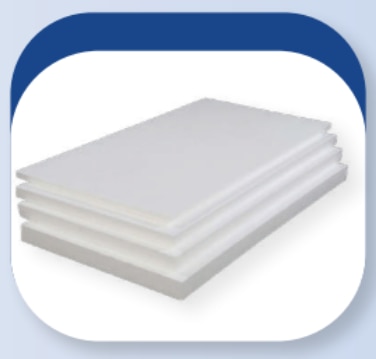 | Ceramic Fiber Board – Rigid High-Temperature Insulation Panel Ceramic Fiber Board – Rigid High-Temperature Insulation Panel Ceramic Fiber Board from Shiv Sales Corporation is a strong, lightweight, and high-temperature insulation panel designed for furnaces, kilns,... View product → |
Frequently asked questions
How do you identify a shed heat problem before choosing ceramic fiber board?
Measure the hot surface, surrounding air and nearby combustible materials, then identify whether heat travels by conduction, radiation or airflow. Map the roof, wall, partition or equipment casing zone requiring insulation.
How should you choose ceramic fiber board thickness, density and temperature grade?
Base the selection on measured temperatures, exposure duration, available installation depth, mechanical loading and the board’s stated maximum service temperature. Ask for the technical datasheet and confirm that its grade exceeds the actual operating condition.
When is ceramic fiber board the wrong choice for a shed zone?
Use a different material where the insulation faces water, abrasion, heavy impact, open weather exposure or a requirement for a rigid protected finish. Compare ceramic board with mineral wool, calcium silicate, cellular glass or refractory systems by zone.
Why is a protected assembly better than exposed ceramic board?
A facing, casing or other protective layer limits fibre release, moisture entry, abrasion and mechanical damage. Design the board together with fixings, joints, supports and the outer protection.
What should a Delhi purchase specification for ceramic board include?
State board dimensions, thickness, density, temperature grade, permitted use, facing or coating, quantity, batch identification and required technical documents. Check that delivered labels and documents match the approved specification.